Affiliate Disclosure:This article contains affiliate links. If you purchase through our links, we may earn a small commission at no extra cost to you. We only recommend gear we've tested or would genuinely use ourselves.
buying guide • May 13, 2026 • 14 min read · The Bite Intel Team
Best Fishing Rod for Kayak Fishing in 2026 (6 Picks)
The best fishing rods for kayak anglers — covering length, power, action, and the best picks from budget to performance. Includes a kayak-specific length guide and spinning vs. baitcasting breakdown.
On a bass boat you can stand up, cast a full arc, and fight a fish with the rod high in the air. On a kayak you're sitting 8 inches off the water, fighting fish at hull level, and casting in a confined space where your backcast can clip the seat behind you. The rod that worked great from a boat might be awkward, too long, or the wrong action entirely from a kayak.
This guide covers what actually matters when choosing a fishing rod for kayak fishing — length sweet spots, why action matters more in a seated position, and the six best rods from budget to performance that work specifically well from a kayak.
Key Buying Criteria for Kayak Fishing Rods
Length: The Kayak Sweet Spot Is 6'6" to 7'6"
Rod length affects casting distance, leverage for fighting fish, and maneuverability. On a kayak, the constraints are different from shore or boat fishing:
- Under 6'6" — Short rods work in tight quarters (dock fishing, overhanging trees) but sacrifice casting distance and leverage. Use these as a second rod for specific scenarios, not as your main setup.
- 6'6" to 7' — The practical kayak sweet spot. Enough reach for accurate casts, manageable in a confined cockpit, and the right leverage for fighting fish from a seated position.
- 7' to 7'6" — Still workable for open water kayak fishing. Gives more casting distance and better hook-setting leverage at range. Gets awkward in tight cover.
- Over 7'6" — Generally too long for kayak fishing. The extra rod length behind you becomes a problem when casting in any direction other than forward.
7 feet is the practical standard for most kayak anglers. Most of the rods in this guide are in that range.
Power and Action
Power (light, medium-light, medium, medium-heavy, heavy) describes how much force it takes to bend the rod. Match power to the size of fish you're targeting and the lure weight you're throwing:
- Light / Medium-Light — Panfish, trout, small bass with light lures (1/16 to 3/8 oz)
- Medium — Bass, walleye, pike with mid-range lures (1/4 to 5/8 oz)
- Medium-Heavy — Bass in heavy cover, larger lures (3/8 to 1 oz), swimbaits and jigs
- Heavy — Large catfish, pike, muskie, big swimbaits
Action (fast, moderate-fast, moderate) describes where the rod bends:
- Fast action bends in the top third of the blank. Better sensitivity, better hook-setting power, more accurate with soft plastics and jigs.
- Moderate-fast bends in the top half. Good for crankbaits and moving lures — the flex absorbs the fish's head shakes and keeps the hooks from pulling.
- Moderate bends through most of the blank. Best for treble-hook lures and lighter presentations.
For kayak fishing where you're mostly throwing soft plastics, jigs, and general-purpose lures, a 7' medium-power fast-action spinning rod is the best all-around starting point.
Tip
If you're buying one rod for kayak fishing, make it a 7' medium-fast spinning setup. It covers 80% of freshwater kayak fishing scenarios and gives you a solid baseline to build additional rods around.
What to Avoid
Don't buy a rod over 7'6" as your primary kayak rod. The extra length behind you during casting creates real problems in the confined space of a kayak cockpit — you'll snag the seat, the tackle crate, or your fishing partner on a tandem.
Avoid ultra-light rods as your only rod. They're great for trout and panfish but have no business setting hooks on a 3 lb bass at 40 feet of distance from a seated position.
Warning
Don't lean rods against the gunwale unattended. A paddle stroke or passing wake will send them overboard instantly. Always store them in a rod holder or secured rod tube.
The 6 Best Fishing Rods for Kayak Fishing
St. Croix Triumph Spinning Rod — Best Overall
4.7/5The St. Croix Triumph is the rod most experienced kayak anglers recommend when someone asks for a serious all-around setup without going into the premium tier. SCII graphite blank with Kigan Master Hand 3D guides, cork handle, and St. Croix's fit and finish — this is a rod that genuinely punches above its price.
The 7' medium-fast version covers bass, walleye, and inshore species with finesse lures through mid-weight presentations. The blank is sensitive enough to feel soft plastic bites, but has enough backbone to drive hooks on a solid hookset from a seated position.
St. Croix is made in the USA and backs it with a 5-year warranty on manufacturing defects. For the price, you're getting a rod that will last for years and handle anything you throw at it from a kayak.
Pros
- SCII graphite blank — excellent sensitivity and strength balance
- Kigan 3D guides reduce line twist and friction noticeably
- Cork grip is comfortable for all-day use
- 5-year warranty from a US manufacturer
- Multiple length/power/action combinations available
Cons
- More expensive than budget options — but earns it
- Not the lightest rod in its class at this price
- Cork grip shows wear over time if not maintained
Ugly Stik GX2 Spinning Rod — Best Budget
4.3/5The Ugly Stik GX2 is the rod everyone has in their garage. That reputation exists for a reason — this rod is essentially indestructible, costs very little, and catches fish. For first-time kayak anglers building out their setup, the GX2 handles the learning curve (accidental tip breaks, getting stepped on at the ramp) without the sting of breaking a nicer rod.
The Clear Tip design and graphite/fiberglass composite blank aren't going to win sensitivity awards, but they're resistant to abuse that would crack a pure graphite rod. The EVA foam grip is comfortable and holds up well in wet conditions.
At 7 feet in medium power, the GX2 covers everything from bass to catfish and handles lures from light spinners to medium jigs. If you're not sure kayak fishing is your thing yet, this is the rod to start with.
Pros
- Extremely durable — graphite/fiberglass composite handles abuse well
- Budget price leaves money for other gear
- 7' medium is a genuinely versatile kayak setup
- Widely available — replaceable anywhere tackle is sold
Cons
- Less sensitive than pure graphite blanks — harder to detect subtle bites
- Heavier than comparable graphite rods
- Not the rod to use when finesse matters
Ugly Stik Elite Spinning Rod — Best Value
4.5/5The Elite sits between the GX2 and premium rods in both price and performance. It uses a higher graphite content blank than the GX2, which translates to meaningfully better sensitivity — you'll feel bites you'd miss with the GX2 — while keeping the Ugly Stik durability reputation intact.
The cork grip on the Elite is a step up from the GX2's foam, and the guides are lighter and better finished. This is the rod for anglers who've outgrown the GX2 but aren't ready to spend St. Croix money. The 7' medium-fast version handles bass and walleye presentations effectively from a kayak seated position.
Pros
- Higher graphite content than GX2 — noticeably better sensitivity
- Cork grip feels more premium, comfortable for longer sessions
- Good middle-ground price point
- Still durable enough for beginner-to-intermediate use
Cons
- Not quite the sensitivity of pure graphite premium rods
- Some models have inconsistent action compared to other brands at this price
Fenwick Eagle Spinning Rod — Best Value Upgrade
4.4/5The Fenwick Eagle is the best rod in the mid-range price band for anglers who want a genuine performance upgrade over the Ugly Stik line without paying St. Croix prices. The IM6 graphite blank is lighter and more sensitive than the GX2 or Elite, the guides are stainless steel frames with hard ceramic inserts, and Fenwick's craftsmanship shows throughout.
At 7 feet in medium-light or medium power, the Eagle excels with finesse presentations — drop shots, small jigs, light Texas rigs — where sensitivity is the difference between catching fish and missing bites. The lighter blank also reduces fatigue on long casting days from a kayak where you can't walk around to shake out your arm.
Pros
- IM6 graphite — light, sensitive blank that telegraphs bites well
- Stainless steel guide frames hold up in both fresh and saltwater
- Noticeably lighter than the Ugly Stik line — reduced casting fatigue
- Good entry point to performance fishing rods
Cons
- Lighter blank is more susceptible to tip breaks than fiberglass composites
- Limited availability compared to Ugly Stik
- Cork grip quality varies by batch
Shakespeare Ugly Stik Carbon — Best Mid-Range Performance
4.3/5The Ugly Stik Carbon is where the brand steps into higher graphite content territory. The blank is 35% lighter than the GX2 while retaining the Ugly Stik reputation for durability. The carbon fiber construction improves sensitivity and reduces tip weight, which matters when you're casting all day from a kayak.
This rod bridges the gap between the budget Ugly Stik line and premium options. The improved guide train and lighter blank make a noticeable difference with finesse lures and drop shot presentations. A good pick for bass anglers who want to fish light without paying for the top tier.
Pros
- 35% lighter than GX2 — real improvement in casting feel
- Carbon construction improves sensitivity over traditional Ugly Stik
- Retains Ugly Stik durability despite the lighter build
- Reasonable price for carbon construction
Cons
- More expensive than the GX2 or Elite for the same brand
- Not quite the sensitivity of dedicated graphite rods at this price point
Abu Garcia Veritas Spinning Rod — Best Performance
4.6/5The Abu Garcia Veritas is the performance pick in this group — 30-ton carbon construction, Titanium SIC guides, Fuji reel seat, and an action tuned for serious bass and inshore fishing. It's light enough that you notice it after hours on the water, sensitive enough to detect soft bites through a long cast, and has the backbone to drive hooks when a big fish takes a jig in the opposite direction.
For experienced kayak anglers targeting bass, redfish, or walleye with precision presentations, the Veritas is a significant upgrade over the mid-range options. The 7' medium-fast version is the kayak standard configuration — enough length for distance, enough backbone for a solid hookset from a seated fighting position.
Pros
- 30-ton carbon blank — premium sensitivity and lightweight
- Titanium SIC guides are smooth and corrosion-resistant
- Fuji reel seat is secure and comfortable
- Action is precisely tuned — consistent through the lineup
Cons
- Higher price — only justified if you're fishing seriously
- 30-ton carbon requires care; not as forgiving as composite blanks
- Overkill for casual or beginner kayak anglers
Rod Length Guide for Kayak Fishing
The kayak fishing community has largely settled on 7 feet as the standard for good reason, but there are legitimate reasons to go shorter or longer:
Go shorter (6'6" or under) when:
- Fishing tight, overgrown shoreline where backcasting space is limited
- Flipping to docks and laydowns at close range
- Running a shorter rod as a second setup alongside a longer primary rod
Stay at 7 feet when:
- This is your only rod and you need it to cover multiple situations
- Fishing open water with varied presentations
- Targeting bass, walleye, or panfish from a sit-on-top kayak
Go longer (7'6") when:
- Fishing wide open water where casting distance matters
- Using crankbaits or swimbaits where a longer rod helps with moderate action
- Your seated height is lower than average and you need more reach for hooksets
Spinning vs. Baitcasting on a Kayak
For beginners: use a spinning rod. Full stop. Baitcasting reels require muscle memory to avoid backlash, and doing that learning curve from a kayak seat while managing drift, wind, and line — without a bailout option — is unnecessarily frustrating.
For experienced anglers: baitcasting on a kayak works well for heavy cover fishing — flipping, pitching jigs, punching mats — where the baitcaster's direct line control and heavier line capacity matter. Use spinning for finesse and baitcasting for power, same as you would from a boat.
The main kayak-specific consideration: when you're seated and fighting a fish at hull level, spinning reels are generally easier to manage because you can palm the reel for leverage. Baitcasters require a more upright fighting position.
How Many Rods to Bring and How to Store Them
Most experienced kayak anglers bring 2–4 rods. A typical all-around bass kayak setup:
- Rod 1 (7' medium-fast spinning) — Soft plastics, jigs, general-purpose
- Rod 2 (7' medium spinning or baitcaster) — Crankbaits, swimbaits, moving lures
- Rod 3 (6'6" medium-light spinning) — Drop shot, finesse worms, light jigs
Store active rods in flush-mount or deck rod holders where you can grab them immediately. Extra rods ride in a fishing crate or dedicated rod tube secured in the tank well. Never lean rods unsecured against the gunwale — a paddle stroke or sudden wave will send them overboard.
Our Recommendations by Budget
| Budget | Best Pick | Why |
|---|---|---|
| Under $50 | Ugly Stik GX2 7' Medium | Durable, reliable, beginner-friendly |
| $50–$100 | Ugly Stik Elite or Fenwick Eagle | Better sensitivity, still affordable |
| $100–$200 | St. Croix Triumph 7' Medium-Fast | Best overall value, lifetime durability |
| $200+ | Abu Garcia Veritas 7' MF | Performance fishing, finesse applications |
Frequently Asked Questions
What length rod is best for kayak fishing? 7 feet is the standard recommendation for most kayak anglers. It balances casting distance, maneuverability in the kayak cockpit, and leverage for hooksets and fighting fish from a seated position. Go shorter (6'6") for tight cover, longer (7'6") for open water casting distance.
Is a spinning rod or baitcaster better for kayak fishing? Spinning rods are better for beginners and for finesse fishing (light lures, drop shot, light jigs). Baitcasters are appropriate for experienced anglers doing heavy cover fishing with heavier lures. Most kayak anglers run spinning setups as their primary configuration.
What power rating should my kayak rod be? Medium power is the all-around starting point — handles bass, walleye, and most freshwater fishing from 1/4 to 5/8 oz lure weights. Move to medium-heavy for big bass in heavy cover or larger inshore species. Use medium-light for finesse fishing and panfish.
Can I use a freshwater rod for kayak inshore fishing? Not long-term. Saltwater and brackish environments corrode guide frames and reel seats on freshwater-rated rods. Look for stainless steel or aluminum oxide guides and corrosion-resistant hardware if you're fishing coastal or tidal water.
How much should I spend on a kayak fishing rod? For beginners: $40–80 gets you a solid Ugly Stik GX2 or Elite that handles the learning curve. For serious anglers: $100–200 gets St. Croix Triumph or Fenwick Eagle quality that will last years. The Veritas at the higher end is only worth it if you're fishing seriously and will notice the difference in sensitivity.
Do I need different rods for different techniques? Yes, eventually. A 7' medium-fast covers 80% of situations but a dedicated crankbait rod (moderate action for better treble hook retention) and a finesse rod (medium-light for drop shot and small plastics) complete a well-rounded kayak setup. See our kayak fishing setup guide for the full picture.
Final Thoughts
For most anglers building their first serious kayak fishing setup, the St. Croix Triumph is the right answer — it's a lifetime rod if you take care of it, and it fishes better than anything in the budget tier. Budget-conscious anglers who are just starting out should begin with the Ugly Stik GX2 and upgrade when they know exactly what they want from their next rod.
Now that you know what rod you want, check out our guide to kayak bass fishing tips to put it to work, and our complete kayak rigging guide for integrating your rods into your full kayak setup.
Related Posts
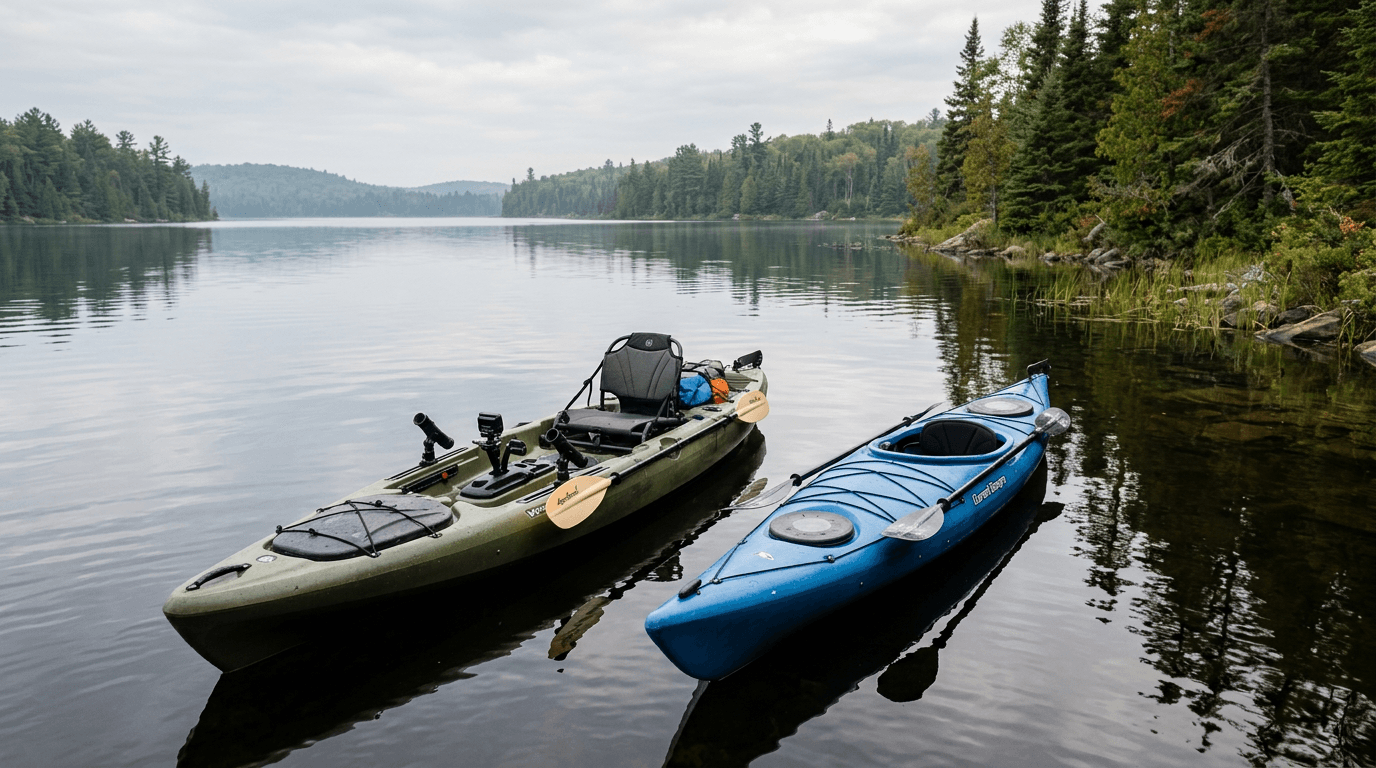
Angler Kayak vs Regular Kayak: 7 Key Differences That Change How You Fish
Angler kayak vs regular kayak — the real functional differences in stability, storage, speed, and cost. Plus whether your regular kayak is worth converting.
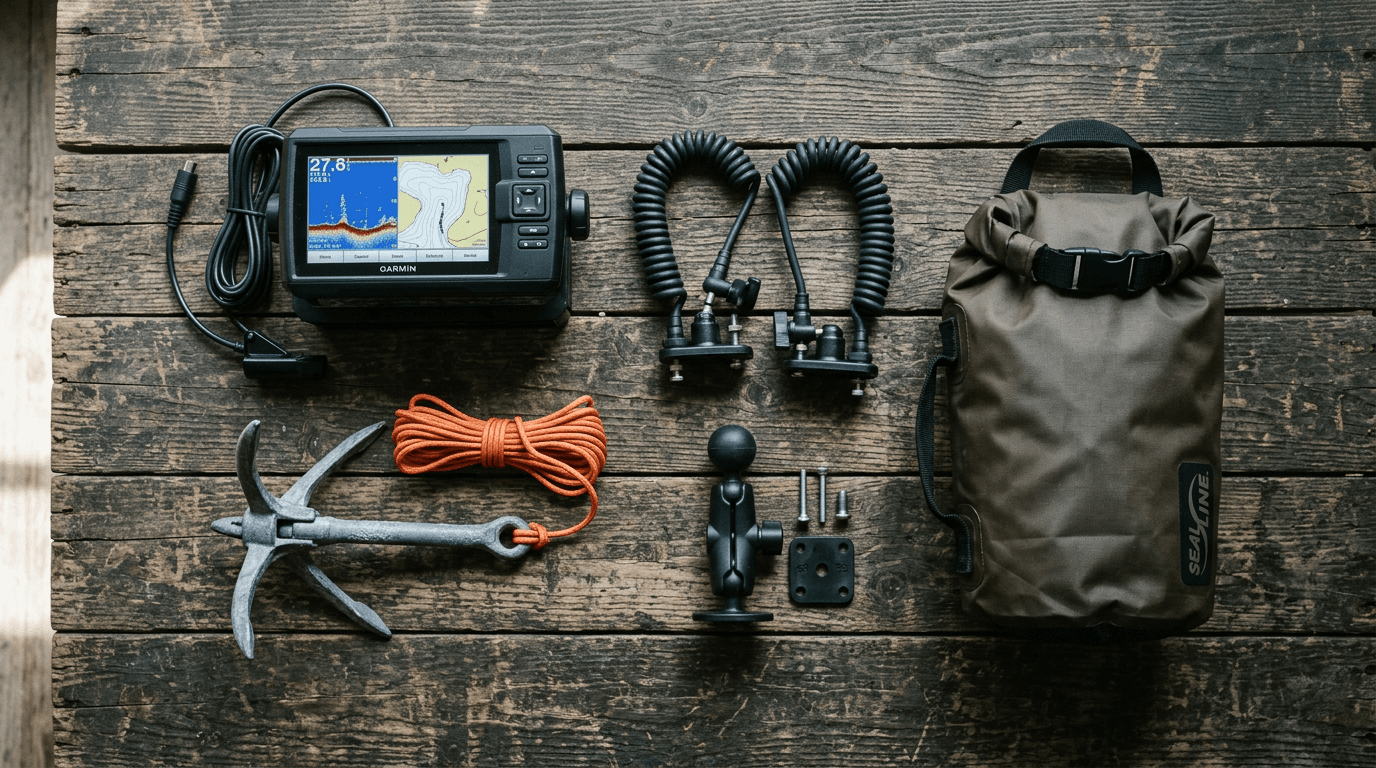
Fishing Kayak Attachments: The Complete Rigging and Mounting Guide
Best fishing kayak attachments explained — track systems, rod holders, fish finder mounts, anchors, and storage. What to buy, where to mount it, and how.
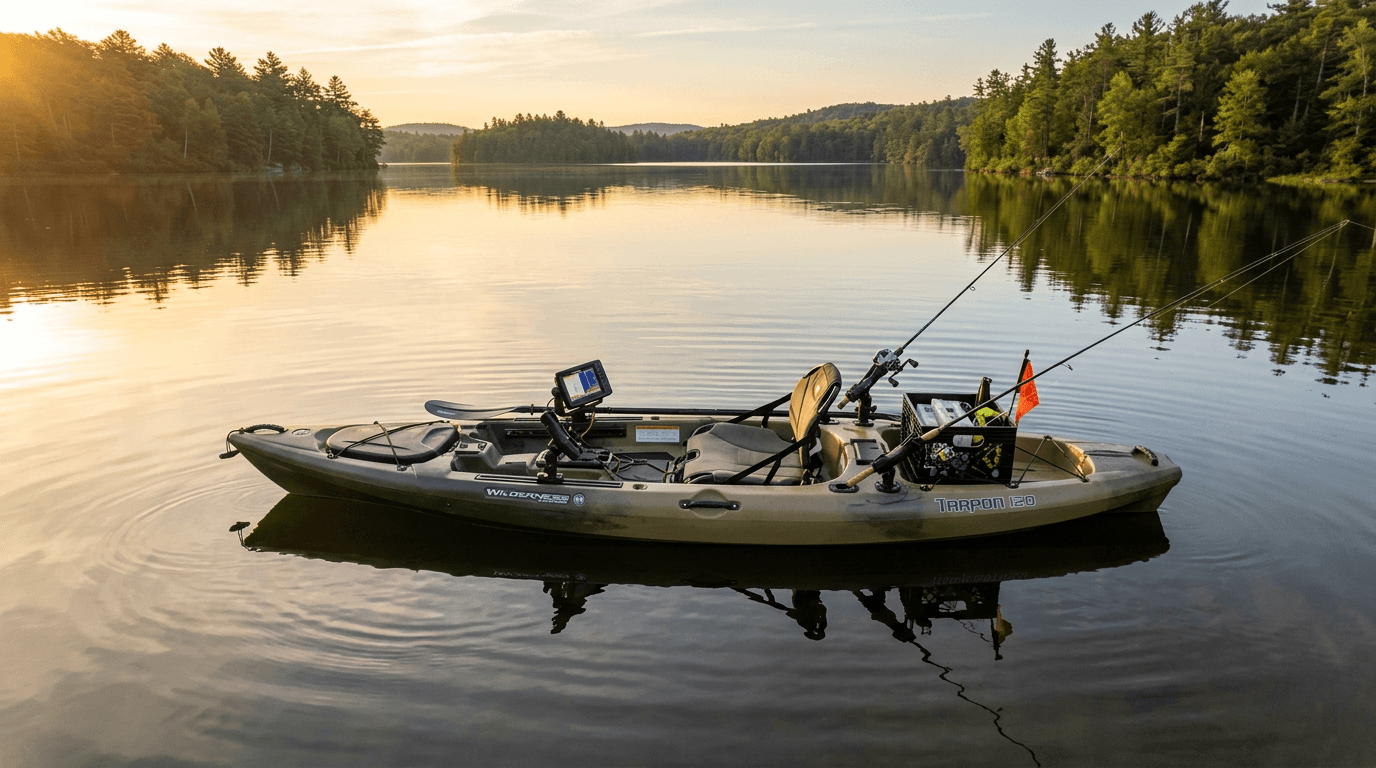
Kayak Fishing Accessories: What to Buy First, What to Skip, and How to Build the Right Setup
Which kayak fishing accessories are worth buying? We break down every category by priority and budget — rod holders, anchors, fish finders, and more.