Affiliate Disclosure:This article contains affiliate links. If you purchase through our links, we may earn a small commission at no extra cost to you. We only recommend gear we've tested or would genuinely use ourselves.
buying guide • May 13, 2026 • 16 min read · The Bite Intel Team
Kayak Rod Holders: The Complete Buying Guide
Every kayak angler needs rod holders, but the wrong type wastes money and ruins your rigging. This guide covers every mount style, material, and brand — so you get it right the first time.
You launch at dawn with two rods rigged and ready. One's a finesse drop-shot, the other's a crankbait for covering water fast. Somewhere between loading up and paddling out, you realize both rods are wedged under your thigh because your kayak either came with zero rod holders or two fixed tubes pointed straight at the sky — useless for anything but trolling.
Rod holders are the most-overlooked piece of kayak rigging. Most anglers assume they're an afterthought, then spend a full season fighting tangled lines, rod tips dragging in the water, and reels getting dunked every time they reach for a paddle. The right setup takes 30 minutes to install and fixes all of it.
This guide covers every rod holder type, what to look for, and six specific picks that cover every budget and kayak style.
Quick Comparison
| Product | Rating | Price | Best For | Link |
|---|---|---|---|---|
| Scotty #230 Powerlock | 4.7/5 | $28–$35 | All-around surface mount | Check Price |
| Brocraft Flush Deck Rod Holder | 4.5/5 | $18–$25 | Budget flush mount | Check Price |
| YakAttack Omega Rod Holder Pro | 4.8/5 | $38–$48 | Gear-track kayaks | Check Price |
| RAM Tube Jr. + Side Deck Base | 4.6/5 | $40–$55 | Adjustable positioning | Check Price |
| Pelican Flush Mount Rod Holder | 4.3/5 | $12–$18 | Basic flush mount replacement | Check Price |
| PLUSINNO Adjustable Clamp Rod Holder | 4.4/5 | $22–$28 | No-drill setup | Check Price |
The Six Best Kayak Rod Holders
1. Scotty #230 Powerlock Rod Holder
4.7/5If you could only buy one rod holder for a fishing kayak, this would be it. Scotty's been making rod holders for decades, and the #230 Powerlock is their bread-and-butter model for a reason: it positively locks the rod in place, releases with a flick of the wrist, and works with virtually every rod and reel combo you'll throw at it.
The Powerlock name comes from the spring-loaded locking bar that automatically engages when you insert the rod butt. Give it a quick twist to release. That mechanism matters when you're paddling through chop or dealing with a strike on a rod you weren't watching — the rod doesn't bounce free.
The kit includes the #241 side/deck surface mount, which means you can screw it directly onto your kayak's gunwale, seat track, or any flat surface without cutting a hole. It swivels 360° once mounted, so you can dial in the angle you want. If your kayak already has a Scotty mounting track, you can swap the base out and click the holder directly into that system.
Price range: $28–$35
Pros
- Positive locking mechanism prevents rod loss underway
- Swivels 360° after mounting — easy to set your preferred angle
- Universal cradle fits spinning, baitcasting, and fly reels
- Scotty's mounting ecosystem is interchangeable — mix and match bases
Cons
- Surface mount requires drilling into your kayak deck
- Plastic locking bar can wear over time with heavy use
- Doesn't work with gear track systems without a separate adapter base
2. Brocraft Flush Deck Rod Holder
4.5/5Flush mount rod holders give your kayak the cleanest look and the strongest hold — because the tube is actually installed through the deck, anchored below the hull layer. The Brocraft Flush Deck is the best flush mount under $25, and it fits nearly every rod butt style thanks to its vertical tilt adjustment.
Unlike cheap flush mounts that are fixed at one angle, Brocraft's holder adjusts both vertically (tilt) and horizontally (rotation) after installation. That flexibility is important because where you mount it determines what angle works — and you won't know the ideal angle until you're on the water. The rubberized interior protects rod handles from rattling and scratching.
Installation requires cutting a hole (typically 1.5–2 inches, depending on the model — check the listing) through the deck. That's a commitment, but it pays off: flush mounts are the most secure option available. Rods stored here won't rattle, lift out in wind, or vibrate loose on rough water.
Price range: $18–$25
Tip
Flush mount holders are permanent — pick your location carefully before cutting. A good rule: mount aft of your seat so rods point toward the stern, keeping tips away from your hands while paddling.
Pros
- Most secure mount type — rod is captured below deck level
- Adjustable tilt and rotation after installation
- Rubberized interior protects rod handles
- Very clean look — no hardware above deck
Cons
- Requires cutting a hole in your hull — permanent modification
- Installation takes more time than surface-mount options
- Not relocatable after install
3. YakAttack Omega Rod Holder Pro
4.8/5If your kayak has a gear track system — the molded rail that runs along the gunwale or on the deck — the YakAttack Omega Rod Holder Pro is the best product in this class. It slides into your track, locks in place with a lever, and adjusts to nearly any angle without tools.
YakAttack makes their products in the USA and the quality shows. The Omega's injection-molded body is tougher than cheaper alternatives, the LockNLoad track connector doesn't rattle or slip, and the holder itself rotates 360° once locked. For kayaks like the Hobie Compass, Old Town Sportsman, or any kayak with RAM or Picatinny-style track, this system lets you add, remove, and reposition holders in seconds.
The "Pro" version has a larger diameter tube than the standard Omega, which means it works with bigger rod handles and higher-capacity baitcasting setups. If you're running heavier gear — 7-foot medium-heavy rods with 200-series reels — get the Pro.
Price range: $38–$48
Pros
- No drilling — installs and removes in seconds via gear track
- Truly tool-free repositioning from the water
- Larger tube diameter fits baitcasting and heavy-action rod handles
- Built in the USA with noticeably better fit and finish than offshore alternatives
Cons
- Requires a compatible gear track system — not useful if your kayak doesn't have one
- Pricier than surface-mount options
- Track base sold separately on some configurations — verify before ordering
4. RAM Tube Jr. Rod Holder with Side Deck Base
4.6/5RAM Mounts built their reputation on motorcycle and vehicle accessory mounts, and the same engineering that keeps GPS units from vibrating off ATVs works just as well for kayak rod holders. The Tube Jr. paired with a RAM side deck base gives you a fully articulating rod holder that you can reposition without removing it from the kayak.
The system uses RAM's ball-and-socket joint, which means the tube can point in almost any direction and locks rock solid with a single knob. That's useful in a way fixed-angle holders can't match: when you need a rod horizontal for a surface presentation and then vertical for a drop shot, you adjust it in three seconds. The stainless steel ball and aluminum socket won't corrode, and the rubber-padded tube keeps rod handles from sliding around.
The one catch: you're buying a system here. The Tube Jr. is the holder, but it requires a RAM base to mount. The "side deck base" version drills to a flat surface; if you want to mount it to a rail or tube, you'll need a different base. Read the listing carefully to confirm you're ordering the bundle.
Price range: $40–$55 (holder + base bundle)
Pros
- Infinitely adjustable articulation — truly any angle
- Stainless and aluminum hardware is genuinely corrosion-resistant
- Modular system — same base works for phone mounts, fish finders, and other RAM accessories
- Rod locks in securely even on choppy water
Cons
- Higher cost once you account for holder + base
- More hardware than simpler options — more to lose or break
- Requires surface drilling for the base plate
5. Pelican Flush Mount Rod Holder
4.3/5Pelican uses this same flush mount on their own fishing kayaks. If you already have a Pelican and want to add more holders to match your existing setup, or if you just want a dead-simple, proven flush mount at the lowest reasonable price, this is the one.
It's not adjustable and it's not fancy. The tube is fixed at a slightly aft angle that works fine for most storage positions. Installation requires a 2.5-inch hole saw and a handful of screws. What you get is a clean, waterproof flush mount that holds any standard rod butt and won't loosen over time.
At $12–$18, it's the right pick for someone adding a third or fourth holder to a rigging setup that already has premium options up front, or for a beginner who wants the simplest possible install.
Price range: $12–$18
Info
This holder is designed for rod storage while paddling, not active fishing. The fixed angle points rods slightly aft, which is ideal behind the seat — not so useful for holding a rod within easy reach during a cast.
Pros
- Lowest price among quality flush mounts
- Same OEM hardware used on Pelican fishing kayaks
- Waterproof sealed install with included gasket
- Simple installation — 2.5-inch hole + four screws
Cons
- Fixed angle — no adjustment after install
- Smaller tube diameter — may not fit larger rod handles
- Not the right choice if you need active-fishing positioning
6. PLUSINNO Adjustable Clamp Rod Holder
4.4/5Not every kayak angler wants to drill. If you're renting, fishing from a sit-on-top that you'd rather not modify, or just testing a position before committing, the PLUSINNO clamp-on holder lets you attach a rod holder to the kayak's rail, gunwale, or any tube up to about 1.75 inches in diameter — no tools, no holes.
The marine-grade stainless clamp holds much better than cheap plastic alternatives. The 360° rotation and 130° tilt adjustment let you get the rod angle you want once it's clamped. Silicone gaskets prevent scratching on your kayak's hull.
The practical limitation: it works best on kayaks with raised rails or gunwales. If your kayak has a flat deck with no rail to grip, you're limited to attaching to the seat frame or handle area, which may not be where you want a rod holder.
Price range: $22–$28
Pros
- Zero drilling required — fully reversible mod
- Works on any rail, tube, or bar up to ~1.75 inches
- Marine-grade stainless clamp hardware
- Good adjustability: 360° rotation + 130° tilt
Cons
- Requires a rail or raised lip to clamp onto — not for flat-deck kayaks
- Less secure than any drilled mount option
- Plastic tightening knobs can strip if overtightened
What to Look for in a Kayak Rod Holder
1. Mount Type
This is the most important decision, and it's driven by your kayak more than anything else.
Flush mount is the strongest and cleanest option. The tube installs through the hull, so rods can't rattle out. Requires cutting a hole — usually 1.5 to 2.5 inches — which makes it a permanent modification. Best for kayaks with open deck space aft of the seat.
Surface mount (like the Scotty) screws to any flat or curved surface and sits on top of the deck. Easier to install than flush mount, slightly less secure. Good for anglers who want flexibility in placement without committing to a hole.
Track mount requires a gear track, but is by far the most versatile once you have it. No drilling, completely repositionable, and you can swap other accessories onto the same track. If your kayak came with gear tracks, use them.
Clamp-on is the no-commitment option. Grips to rails and raised edges. Useful for testing positions before drilling, or for setups where modification isn't possible.
Tip
Most kayak anglers end up with a combination: flush mounts in fixed stern positions for rod storage, and a track or surface mount up front for the rod they're actively fishing.
2. Material and Corrosion Resistance
Rod holders spend their lives around saltwater, fresh water, UV exposure, and fish slime. The best materials:
- Fiber-reinforced nylon (used by Scotty) — the industry standard. Strong, UV-stable, doesn't corrode.
- ABS plastic — common in budget flush mounts. Fine for freshwater but can get brittle with heavy UV exposure over time.
- Marine-grade stainless hardware — essential for clamp and RAM-style mounts. Avoid chrome-plated steel, which will rust.
3. Locking Mechanism
Open-style holders (no lock) work fine for storage while paddling and are the easiest to grab from. The rod can bounce out in heavy chop or if you get hit by a boat wake.
Positive-lock holders (like the Scotty Powerlock) automatically secure the rod with a spring-loaded bar. They're better for trolling, rough conditions, or when you're storing a rigged rod and moving long distances.
For most kayak anglers, one locking holder up front and open-style storage holders in the back is the practical setup.
4. Tube Diameter and Compatibility
Standard spinning and casting rods fit most holder tubes without issue. Where anglers run into trouble:
- Large grip handles (like cork cork-split grips or oversized foam handles) may not fit narrow flush mount tubes. Check the inner diameter — look for 1.5 inches minimum.
- Fly rods have thin, straight grips that can rattle in oversized tubes. YakAttack's Omega line has models sized specifically for fly rod handles.
- Ice rod handles are too short for most kayak holders and aren't designed for this use.
Installation Tips
Flush Mount Installation
You'll need: a hole saw (size listed on the product page — usually 1.5" to 2.5"), a jigsaw or drill, marine sealant, and the included hardware.
- Mark your position. Sit in the kayak and have someone mark where your hands land naturally. Your rod holders should be within easy reach from a seated position. For storage holders, mark positions behind your seat.
- Check below. Before cutting, look (or reach) under the deck to confirm there's no foam flotation or internal structure where you're cutting. Many kayaks have foam behind the hull that will block or complicate a flush mount installation.
- Cut the hole. Drill a pilot hole first, then use the hole saw.
- Seal it. Apply marine-grade silicone sealant around the flange before screwing it down. This keeps water from seeping under the lip and pooling inside the hull.
- Let it cure. Wait 24 hours before getting the kayak wet.
Surface Mount Installation
Same sealant process. Use stainless steel screws (not the zinc-plated hardware often included). Pre-drill pilot holes to avoid cracking the hull material.
Track Mount Installation
Align the LockNLoad or compatible connector with your track channel. Slide in, rotate 90°, and lock. That's it. No tools required.
Warning
Don't skip the marine sealant on any drilled installation. Water that gets under the deck lip and sits against the fiberglass or plastic hull will cause long-term delamination and staining — even in polyethylene hulls.
FAQ
How many rod holders do I need on a fishing kayak? At minimum, two. One for the rod you're actively fishing and one spare for a second rigged setup. Most kayak anglers end up with three to four total: two behind the seat for storage and one or two forward or at the side for active presentations. Start with two and add as your fishing style evolves.
What size hole do I need for a flush mount? It depends on the product — always check the listing. Common sizes are 1.5 inches (narrow-tube flush mounts), 2 inches (standard), and 2.5 inches (Pelican OEM size). Measure twice before cutting.
Can I add rod holders to any kayak? Yes, with the right mount type. Sit-on-tops with open decks are easiest to drill — they're thick polyethylene with no interior structure to hit. Sit-inside kayaks are more complex because the deck surface is thinner and interior access is limited. Inflatable kayaks require clamp-on mounts only — no drilling.
Do I need a locking rod holder? Not for every position. For behind-the-seat storage holders, an open-style flush mount is fine — rods are resting there while you paddle and the angle keeps them from bouncing out. For a rod you're trolling or leaving unattended in chop, a positive-lock holder is worth it.
Can I install rod holders myself, or do I need a shop? Anyone comfortable with a drill can do this. Flush mount installation is the most involved — you're cutting a hole and sealing it. Surface mount is easier, closer to hanging a picture frame. Track mount requires no tools at all. If you're not sure, take the kayak to a local outfitter and have them do the first install while you watch.
What's the difference between a rod holder and a rod leash? A rod holder secures the rod butt in a tube — it holds the rod for you. A rod leash is a thin cord that clips to the rod and to the kayak so if the rod falls overboard, it stays tethered. They do different jobs. A good rod holder eliminates the need for leashes on stored rods, but many anglers still use a leash on the rod they're actively fishing as insurance.
Final Verdict: Which One for Your Setup?
| Your situation | Best pick |
|---|---|
| No gear track, want the most secure mount | Scotty #230 Powerlock |
| Want a clean permanent install on a budget | Brocraft Flush Deck |
| Kayak has gear track (Hobie, Old Town, etc.) | YakAttack Omega Pro |
| Want infinite angle adjustability | RAM Tube Jr. + Side Base |
| Adding a third or fourth storage holder cheaply | Pelican Flush Mount |
| Can't or won't drill — clamp-on only | PLUSINNO Adjustable Clamp |
For most beginner kayak anglers setting up their first rig: start with two Scotty #230 Powerlocks mounted aft of the seat. They're versatile enough to work on any kayak, the locking mechanism is practical, and the Scotty ecosystem means you can expand to tracks and other accessories down the road using the same base hardware. If your kayak has gear track, skip straight to the YakAttack system — you'll never go back to drilled mounts.
About The Bite Intel Team
The Bite Intel Team researches and curates the best kayak fishing gear based on extensive product analysis, angler community feedback, and manufacturer specs.
Related Posts
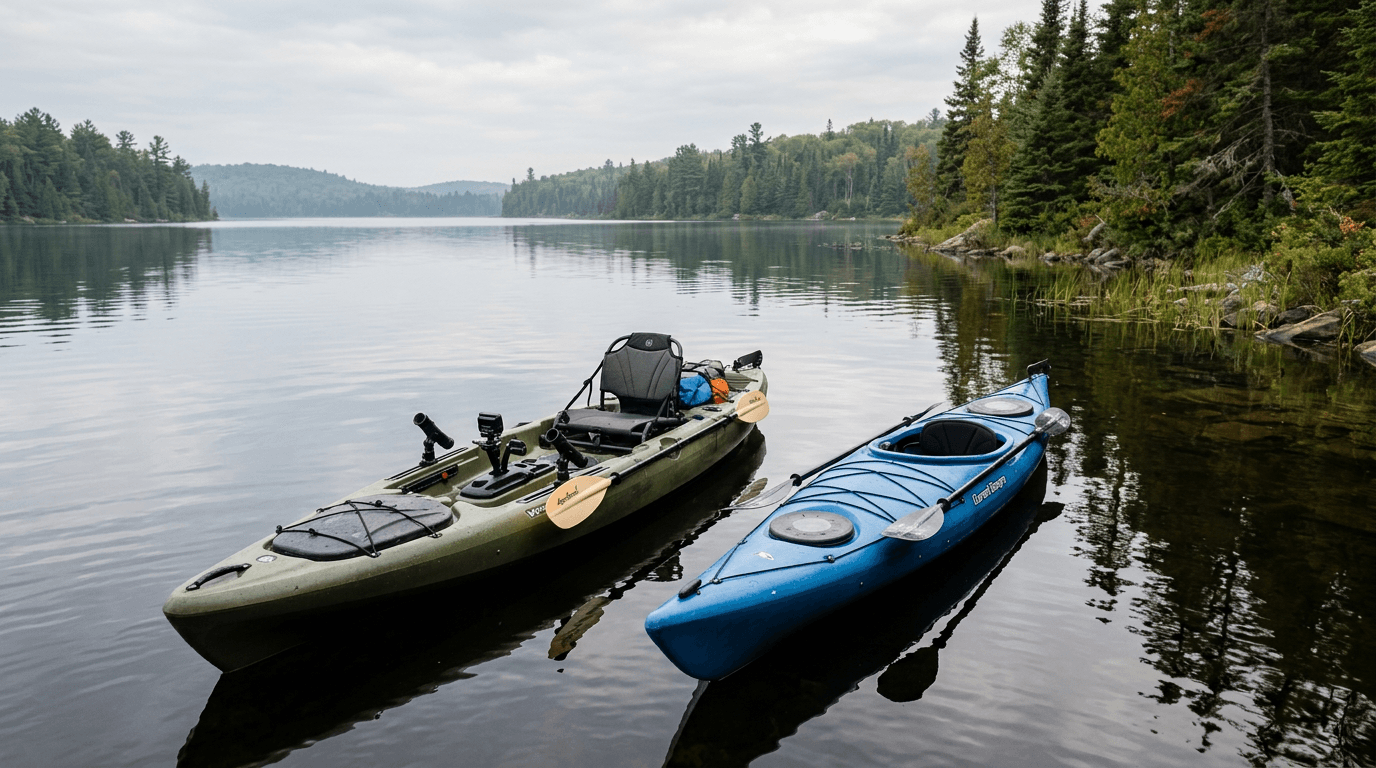
Angler Kayak vs Regular Kayak: 7 Key Differences That Change How You Fish
Angler kayak vs regular kayak — the real functional differences in stability, storage, speed, and cost. Plus whether your regular kayak is worth converting.
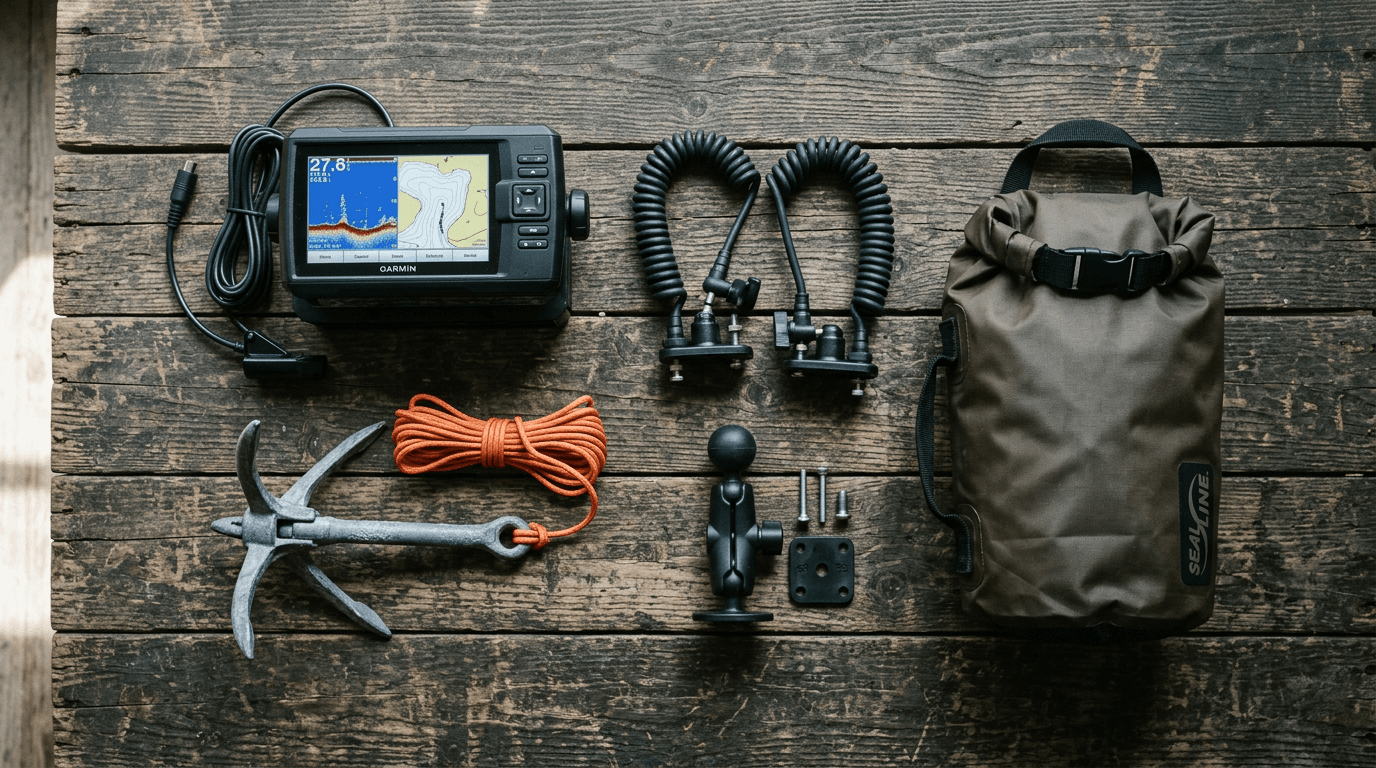
Fishing Kayak Attachments: The Complete Rigging and Mounting Guide
Best fishing kayak attachments explained — track systems, rod holders, fish finder mounts, anchors, and storage. What to buy, where to mount it, and how.
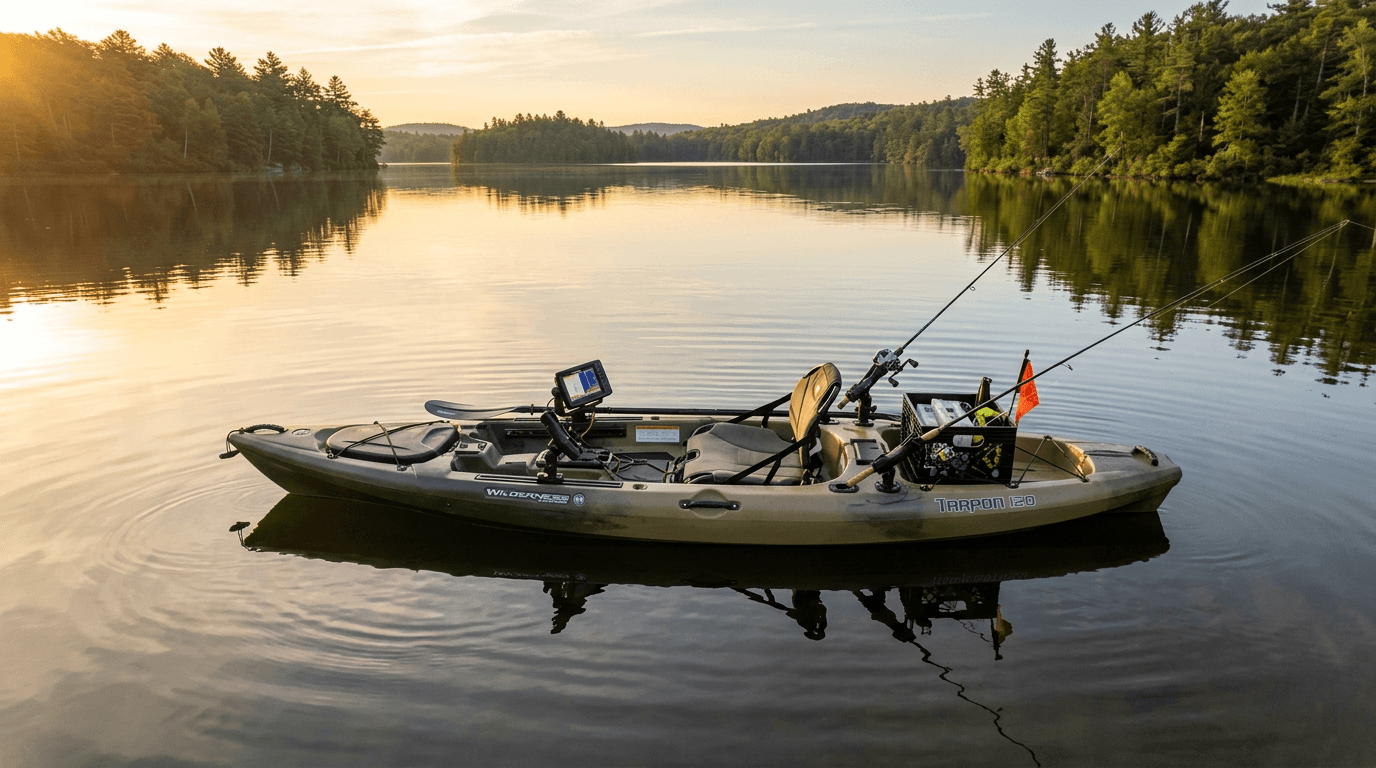
Kayak Fishing Accessories: What to Buy First, What to Skip, and How to Build the Right Setup
Which kayak fishing accessories are worth buying? We break down every category by priority and budget — rod holders, anchors, fish finders, and more.