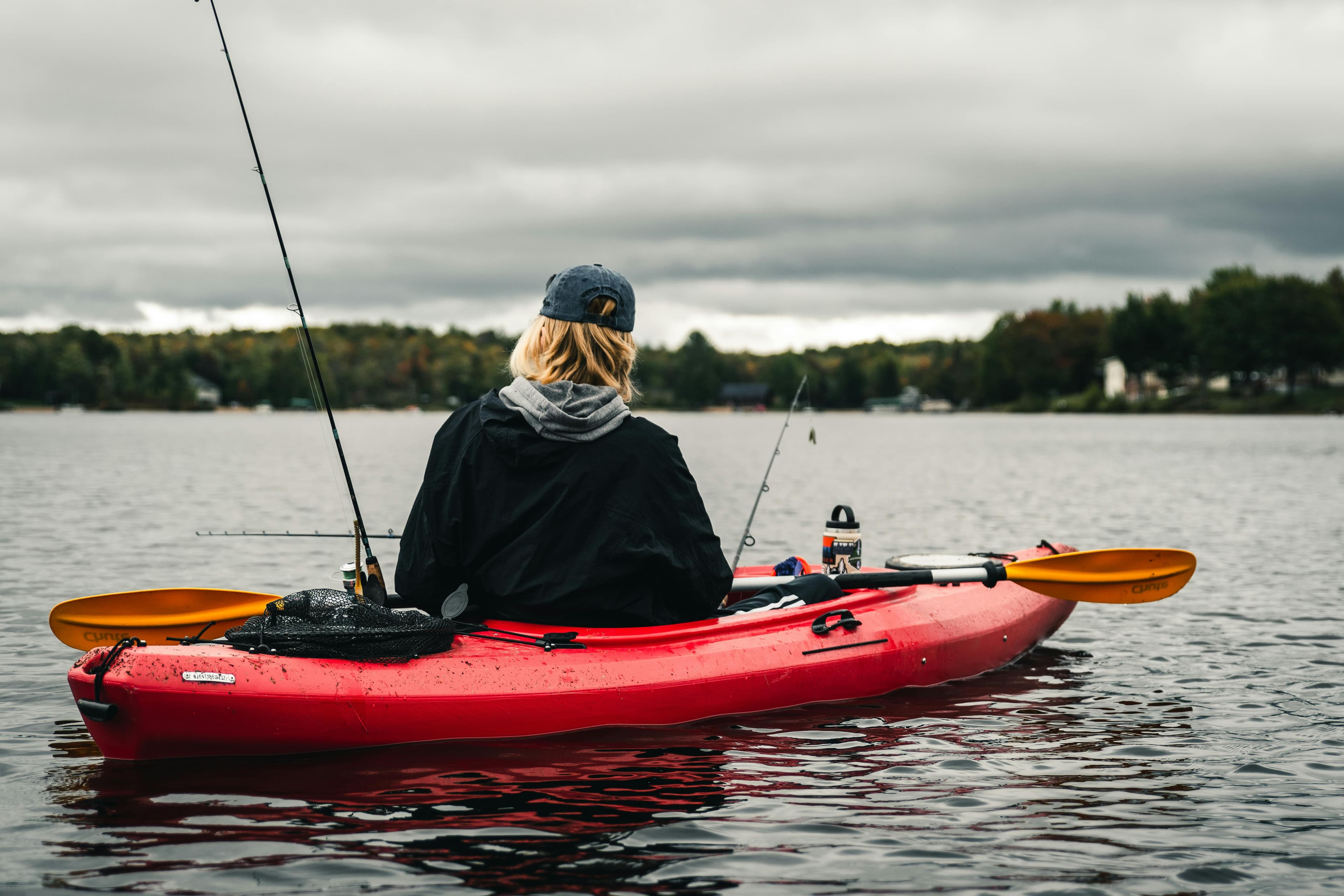
Affiliate Disclosure:This article contains affiliate links. If you purchase through our links, we may earn a small commission at no extra cost to you. We only recommend gear we've tested or would genuinely use ourselves.
top list • May 13, 2026 • 17 min read · The Bite Intel Team
Best Kayak Outriggers for Fishing in 2026: Stability Worth Every Penny
Tired of your kayak wobbling when you cast or fight a big fish? These are the best kayak outriggers for fishing — tested picks from $55 to $120 that actually hold steady when it counts.
You're reeling in a decent bass and the kayak tips hard to one side. Your heart stops. The rod tip dips toward the water. You save the fish, but your confidence takes a hit.
That moment — the sudden lurch when you shift weight or fight a fish that's pulling hard — is exactly why kayak outriggers exist. They turn a tippy sit-on-top into a stable casting platform. For anglers who want to stand up to sight fish, they're basically mandatory.
The problem is the market is flooded with cheap pontoon kits that flex and flop, and premium systems that cost as much as a decent rod. After sorting through the options, these six actually do what they're supposed to.
Info
Outriggers add secondary stability — the resistance you feel when the kayak starts to lean. They don't make a kayak tip-proof. You still need to manage your center of gravity, especially in waves or current.
Quick Comparison
| Product | Rating | Price | Best For | Link |
|---|---|---|---|---|
| Brocraft Kayak Outrigger System | 4.3/5 | ~$85 | Best overall value | Check Price |
| YakGear Kayak Outrigger Kit | 4.2/5 | ~$90 | Anglers who move spots often | Check Price |
| Scotty Kayak Outrigger System | 4.4/5 | ~$80 | Modular gear track setups | Check Price |
| RAILBLAZA Stabi-Kit | 4.5/5 | ~$120 | Standing and sight fishing | Check Price |
| Marine City Outrigger Stabilizer | 4/5 | ~$65 | Calm freshwater lakes | Check Price |
| SeaSense Pontoon Stabilizer Kit | 3.8/5 | ~$55 | Budget entry point | Check Price |
1. Brocraft Kayak Outrigger System — Best Overall
4.3/5The Brocraft system is where most anglers should start. The arm length is generous — around 18 inches per side — the floats are properly sized for a sit-on-top fishing kayak, and the clamp-on mounting works on standard kayak rails and gunwales without drilling.
What separates it from cheaper kits at this price is the aluminum arm construction. Budget options use hollow plastic arms that flex and creak under load. Brocraft's arms hold their angle and don't sag when you're reaching out for a cast or fighting a fish sideways. The floats are EVA foam-filled, so there's no deflation risk and no maintenance.
Setup takes about 20 minutes the first time. Clamp the base to your rail or gunwale, slot in the arm, tighten with a hex key. The stabilizing effect is immediately noticeable — the first time you reach out to cast without grabbing the sides for balance, you'll understand why people buy these.
Standing is possible on flat, calm water with good weight distribution. That's not where this system shines, but for seated fishing across a wide range of conditions, it earns its spot as the default recommendation.
Pros
- Aluminum arms — no flex or sag under load
- EVA foam-filled floats — zero maintenance, can't puncture
- Clamp mounts fit most standard kayak rails without drilling
- Generous arm length for effective stabilization
- Complete kit under $90
Cons
- Floats slightly undersized for dedicated standing use
- Clamps can shift on round-profile rails over time
- No folding arm — remove fully when paddling tight cover
2. YakGear Kayak Outrigger Kit — Best for Moving Between Spots
4.2/5YakGear is one of the better-known names in kayak fishing accessories, and their outrigger kit is designed with actual fishing in mind. The arm angles are set to keep the floats out of your casting lane — which sounds obvious, but a lot of generic kits get this wrong and you end up tangling your line or limiting your swing.
The float design is the standout feature. They're longer and slimmer than most competitors, which cuts drag when you're paddling to your spot. If you cover half a mile or more between fishing locations, that shape makes a real difference. You'll feel less resistance at the paddle and less fatigue on longer days.
Mounting uses a rail-clamp system compatible with most standard 3/4" tracks. YakGear also sells other accessories that bolt into the same system, so if you're building out your rigging setup over time, you won't need to buy a whole new mounting solution when you add gear.
The main trade-off is arm length — at around 16 inches, it's shorter than the Brocraft. For seated fishing, it's more than adequate. If standing is a goal, you'll feel the difference.
Pros
- Slim float profile reduces paddling drag — good for covering water
- Arm angle keeps floats clear of your casting lane
- Compatible mounting with other YakGear accessories
- Marine-grade hardware throughout
- Solid choice for anglers who fish multiple spots per trip
Cons
- Shorter arm span than Brocraft at a similar price
- Standing fishing requires careful weight distribution
- Rail clamp compatibility varies — check your specific kayak model
3. Scotty Kayak Outrigger System — Best for Gear Track Setups
4.4/5If your kayak already has Scotty gear tracks installed — or you're planning to add them — this is the outrigger system to get. Scotty's mounting ecosystem is one of the most versatile in kayak fishing. Once you're in it, adding, swapping, and repositioning accessories is plug-and-play.
The outrigger mounts to a Scotty base, which snaps into any Scotty track. No drilling into the hull, no permanent modification. You can slide the outriggers fore or aft along the track, swap them out for rod holders or camera mounts, or pull them off entirely in about 10 seconds. That modularity is genuinely useful when conditions change mid-trip.
Float construction is solid foam with a reasonable diameter. The arm span works well for seated fishing. Build quality is noticeably higher than budget alternatives — this is a system you'll still be using in season four.
One thing to factor in: this requires Scotty track already on your kayak. If you're starting from scratch, add roughly $20–30 per side for track mounts. That said, the tracks open up the full Scotty accessory catalog, so the investment usually pays off beyond just outriggers.
Pros
- Snaps into Scotty track — no drilling, fully removable in seconds
- Repositionable anywhere along the track
- Opens access to the full Scotty accessory ecosystem
- Solid foam float construction and reliable hardware
- Best option if you're already running Scotty mounts
Cons
- Requires Scotty gear track — added cost if not already installed
- Scotty base sometimes sold separately depending on listing
- Arm span is not the widest at this price point
4. RAILBLAZA Stabi-Kit — Best for Standing and Sight Fishing
4.5/5This is the premium pick on this list, and it earns the price if standing stability is what you're after. The RAILBLAZA Stabi-Kit uses larger floats than any other system here, and the arm geometry is purpose-built for maximum lateral resistance — the combination of arm length and float volume gives you the widest effective base.
The float volume is roughly double what entry-level kits provide. That matters when you're standing to sight fish on shallow flats, fighting a fish that's running hard perpendicular to the kayak, or when a boat wake hits from the side unexpectedly. The stability difference compared to a mid-range system is something you feel immediately.
Mounting is through RAILBLAZA's StarPort system — their proprietary track fitting. It's clean, secure, and rattle-free under load. No creaking, no shift, no vibration at paddling speed. If you're in the RAILBLAZA ecosystem or willing to add their bases, the integration is excellent.
The honest case against it: if you fish seated and the water is calm to moderate, the Brocraft or Scotty system serves you just as well at $35–40 less. Pay the premium specifically for standing fishing. If that's your goal, this system is worth every dollar.
Pros
- Largest floats on this list — purpose-built for standing stability
- Arm geometry engineered for maximum lateral resistance
- RAILBLAZA StarPort mount — rattle-free, secure under load
- Best system for sight fishing and standing on shallow flats
- Premium build quality — will last many seasons
Cons
- Most expensive option at ~$120
- Requires RAILBLAZA StarPort base — additional cost if not installed
- Overkill and overpriced for anglers who fish seated
5. Marine City Kayak Outrigger Stabilizer — Solid Mid-Budget Option
4.0/5Marine City hits the middle of the budget range and performs well in the conditions most kayak anglers actually fish: calm lakes, slow rivers, and protected bays. The arm span is reasonable, float size is adequate, and the price is fair for what you get.
The construction is a step down from aluminum-arm options — the tubes are thicker-walled plastic rather than metal. They're lighter but flex more under load. On flat water with normal fishing movement, you won't notice. In wind chop or when fighting a strong fish pulling sideways, you'll feel the system give a little.
Mounting is clamp-based, compatible with most standard kayak gunwale rails. The clamping hardware is functional but less refined than the Brocraft or Scotty systems. It's worth testing the clamp fit on your specific rail width before you're out on the water.
For freshwater anglers who fish protected water and have no interest in standing, this is a reasonable price-to-performance option. If you fish in any kind of wind or want to stand at all, invest the extra $20 and get the Brocraft.
Pros
- Good price (~$65) for calm-water fishing use
- Lighter than aluminum-arm systems
- Clamp mount works on most standard gunwale rails
- Adequate stability for seated freshwater fishing
Cons
- Plastic arm tubes flex noticeably under real load
- Not recommended for standing or exposed water
- Clamping hardware is less secure than premium alternatives
6. SeaSense Pontoon Stabilizer Kit — Budget Entry Point
3.8/5The SeaSense kit is the cheapest option on this list — and it shows — but it has a legitimate use case. For anglers who fish exclusively on flat, protected water and just want some added confidence while seated, this kit does the job.
The floats are inflatable rather than foam-filled. That's the main trade-off at this price. Inflatable means checking pressure before each trip, carrying a patch kit, and watching for UV degradation over time. The upside is that deflated floats pack flat for storage, which matters if space is tight.
The arm construction is basic PVC tubing — it gets the floats out wide enough to make a difference, but the flex is noticeable. Think of this as a training wheel system: it'll calm your nerves on still water and let you figure out whether outriggers work for your fishing style before committing to a $90 setup.
Don't buy this if you fish in any wind or current, fight large fish regularly, or have any interest in standing. For the pond or lake angler doing casual panfishing from a seated position, it's a workable starting point.
Pros
- Lowest price point on this list (~$55)
- Inflatable floats pack flat — easy to store
- Adequate for flat-water, seated fishing
- Low-risk way to try outriggers before spending more
Cons
- Inflatable floats require maintenance and can puncture
- PVC arm flex is noticeable under any real load
- Not suitable for standing, rough water, or large fish
- Inflatables degrade faster than foam-filled alternatives
What to Look for in Kayak Outriggers
Float Size and Volume
Float size is the single most important spec. Bigger floats provide more buoyancy and a stronger stabilizing effect, but also create more drag when paddling. Most manufacturers don't publish float volume directly — you judge by dimensions in the product photos.
A rough guide:
- Small floats (thin, short): Entry-level, seated fishing on calm water only
- Medium floats: Good for most seated fishing, marginal for standing
- Large floats (thick, long): Suitable for standing on calm to moderate water
If you're between sizes, always go larger. You'll never regret more stability, but you'll definitely notice when you have too little — usually right when it matters most.
Arm Length
The longer the arm, the wider your effective base and the more resistance you get when the kayak leans. Arm length also determines how far the floats sit from your paddle arc.
- Under 16 inches: Minimal stabilization, can clip paddle stroke
- 16–20 inches: Good balance for most seated fishing
- 20+ inches: Maximum stability, required for standing
Check whether arms are fixed or adjustable. Some systems let you change arm angle, which affects both float clearance and stabilization level.
Mounting System
How outriggers attach to your kayak matters as much as the outriggers themselves. Three main options:
Clamp-on: Attaches to the gunwale or rail without drilling. Works on almost any kayak. Can shift over time on smooth or round-profile rails. Most affordable and forgiving for beginners.
Gear track mount: Attaches to T-slot or proprietary tracks (Scotty, RAILBLAZA, YakAttack). Secure, repositionable, rattle-free. Requires compatible tracks already installed or that you add them.
Through-bolt: Drills through the hull — permanent, most secure. Usually reserved for DIY custom installs.
For most anglers, clamp-on or gear-track is the right call. Gear-track is worth the upfront investment if you're rigging out a dedicated fishing kayak.
Arm and Float Material
Arms:
- Aluminum: Best choice. Light, stiff, corrosion-resistant. Worth paying extra for.
- Fiberglass: Found on some premium systems. Stiff and light, higher cost.
- Plastic/PVC: Budget option. Flexes under load and degrades with UV exposure.
Floats:
- Foam-filled: Maintenance-free, can't puncture, durable. Always preferred.
- Inflatable: Lighter and packable, but require pressure checks and can fail.
Tip
If you're on the fence between float sizes, size up. You'll never wish you had less stability when you're a quarter-mile offshore in a wind chop.
Installation Tips
Before you start: Lay all hardware on a towel and check against the parts list. Missing one bolt ruins your launch.
Find your mounting position first. Ideal placement is roughly in line with your seat — too far forward or back shifts your balance point instead of helping it. Most anglers mount between the seat and the rear tankwell.
For clamp-on systems:
- Position the clamp base on your rail finger-tight first
- Sit in the kayak and confirm the arm angle clears your full paddle stroke on both sides
- Tighten fully, then try to slide the clamp by hand — if it moves at all, add marine non-slip tape between the clamp and rail
- Float the kayak in shallow water before your first real trip and deliberately lean to each side to test the system
For gear-track systems:
- If tracks are installed, insert the base fitting, lock it, and attach the arm — done in under a minute
- If you're installing new tracks, position them so the outrigger base ends up roughly at seat level when assembled
Set float angle. Most systems let you adjust whether floats sit flat on the water or angle up slightly. Flat is more stable for fishing. Angled up reduces drag when paddling to your spot.
Use blue Loctite on all bolts. Hardware that vibrates and gets wet will loosen. Blue Loctite (removable, not permanent) on each bolt thread keeps things from backing out mid-trip.
Warning
Check all hardware every few trips. Clamp-on systems in particular can shift — especially if you're frequently loading and unloading the kayak from a vehicle or fishing in any current.
FAQ
Do kayak outriggers slow you down when paddling?
Yes, but less than you'd expect at normal fishing speeds (2–4 mph). Foam-filled floats with a reasonable arm angle add manageable resistance. Inflatable or large-diameter floats create more drag. If you cover a lot of water between spots, consider a slim-float system like the YakGear — the narrower float profile makes a real difference on longer paddles.
Can I stand up on a kayak with outriggers?
On calm water with the right setup, yes. You need substantial float volume, arms at 20 inches or longer, and you should practice the sit-to-stand transition in shallow water before trusting it offshore. The RAILBLAZA Stabi-Kit is designed specifically for this use. The Brocraft and Scotty systems can support standing on flat water with careful technique, but they're not built for it the way the RAILBLAZA is.
Will kayak outriggers fit my kayak?
Clamp-on systems fit the vast majority of sit-on-top fishing kayaks with standard gunwale rails. Check your rail width against the system's compatibility specs before buying. Gear-track systems require compatible tracks (Scotty, RAILBLAZA, YakAttack) — either already installed or that you add them first.
Can I leave outriggers mounted while paddling to my spot?
Yes — most systems are designed to stay on while you paddle. The floats ride above the waterline at speed and only engage when you slow down or stop. Fixed-arm systems without a fold option can limit maneuverability in tight, brushy cover, so keep that in mind when picking your launch route.
Will outriggers make my kayak safe in rough water?
They improve stability in rough conditions, but they're not a substitute for good judgment, a properly fitted PFD, and knowing your limits. Outriggers add resistance to tipping — they don't eliminate it. In significant chop or current, read the water and adjust accordingly.
Can I install kayak outriggers myself?
Yes. Clamp-on systems require no drilling and install in under 30 minutes with basic tools. Gear-track systems are equally simple if compatible tracks are already in place. Installing new gear tracks requires drilling through the kayak hull — doable at home with a drill and marine sealant, but it's permanent, so measure twice.
Final Verdict
| Product | Rating | Price | Best For | Link |
|---|---|---|---|---|
| Brocraft Outrigger System | 4.3/5 | ~$85 | Best all-around — most anglers should start here | Check Price |
| RAILBLAZA Stabi-Kit | 4.5/5 | ~$120 | Standing, sight fishing, serious stability | Check Price |
| Scotty Outrigger System | 4.4/5 | ~$80 | Kayaks already running Scotty gear tracks | Check Price |
| YakGear Outrigger Kit | 4.2/5 | ~$90 | Covering water between multiple spots | Check Price |
| Marine City Stabilizer | 4/5 | ~$65 | Calm freshwater on a tight budget | Check Price |
| SeaSense Pontoon Kit | 3.8/5 | ~$55 | First-time trial, light use only | Check Price |
Most anglers should buy the Brocraft Outrigger System. It's the right balance of aluminum arm construction, adequate float size, and price for the typical kayak angler who wants stable seated fishing without tipping on a cast or a hard head shake from a decent fish.
If standing stability is the goal, buy the RAILBLAZA Stabi-Kit. The float volume and arm geometry are purpose-built for it, and nothing else on this list is close.
If your kayak already has Scotty tracks, buy the Scotty system. The modular mounting makes it the obvious call and the build quality holds up.
The SeaSense and Marine City kits are fine starting points for flat-water use, but most anglers will want more system within a season. Spend the extra $30 upfront and get something you'll still trust in year three.
About The Bite Intel Team
The Bite Intel Team researches and curates the best kayak fishing gear based on extensive product analysis, angler community feedback, and manufacturer specs.
Related Posts
Best Rod Holders for Fishing Kayaks: 7 Tested Picks for Every Setup
Best rod holders for fishing kayaks reviewed and ranked: 7 picks from YakAttack, Scotty, and Railblaza for flush mount, track mount, and no-drill installs.
Best Cooler for Kayak Fishing in 2026 (6 Picks Reviewed)
The best coolers for kayak fishing — covering hard coolers, soft coolers, size, ice retention, and how to fit one on your kayak without sacrificing storage or stability.
Best Fish Finder for Kayak: 6 Units Tested for 2026
The best fish finders for kayak fishing — from the Garmin Striker 4 budget pick to the Deeper PRO+ castable sonar. Buyer's guide, mounting tips, and honest reviews.