Affiliate Disclosure:This article contains affiliate links. If you purchase through our links, we may earn a small commission at no extra cost to you. We only recommend gear we've tested or would genuinely use ourselves.
top list • May 11, 2026 • 18 min read · The Bite Intel Team
7 Best Kayak Anchor Trolley Kits in 2026 (Tested for Fishing)
The best kayak anchor trolley kits for anglers — from budget stainless kits to the YakAttack LeverLoc. Stop drifting off your spot.
You find a good drop-off, set your anchor, and immediately start rotating 30 degrees clockwise. By the time your bait hits bottom you're facing the wrong direction. The anchor's holding — your bow just isn't.
That's what a bow anchor alone does. It pins the front of the kayak but lets the wind and current spin the stern wherever they want. You end up at a weird angle, your line crosses your hull, and you're spending half your energy fighting position instead of fishing.
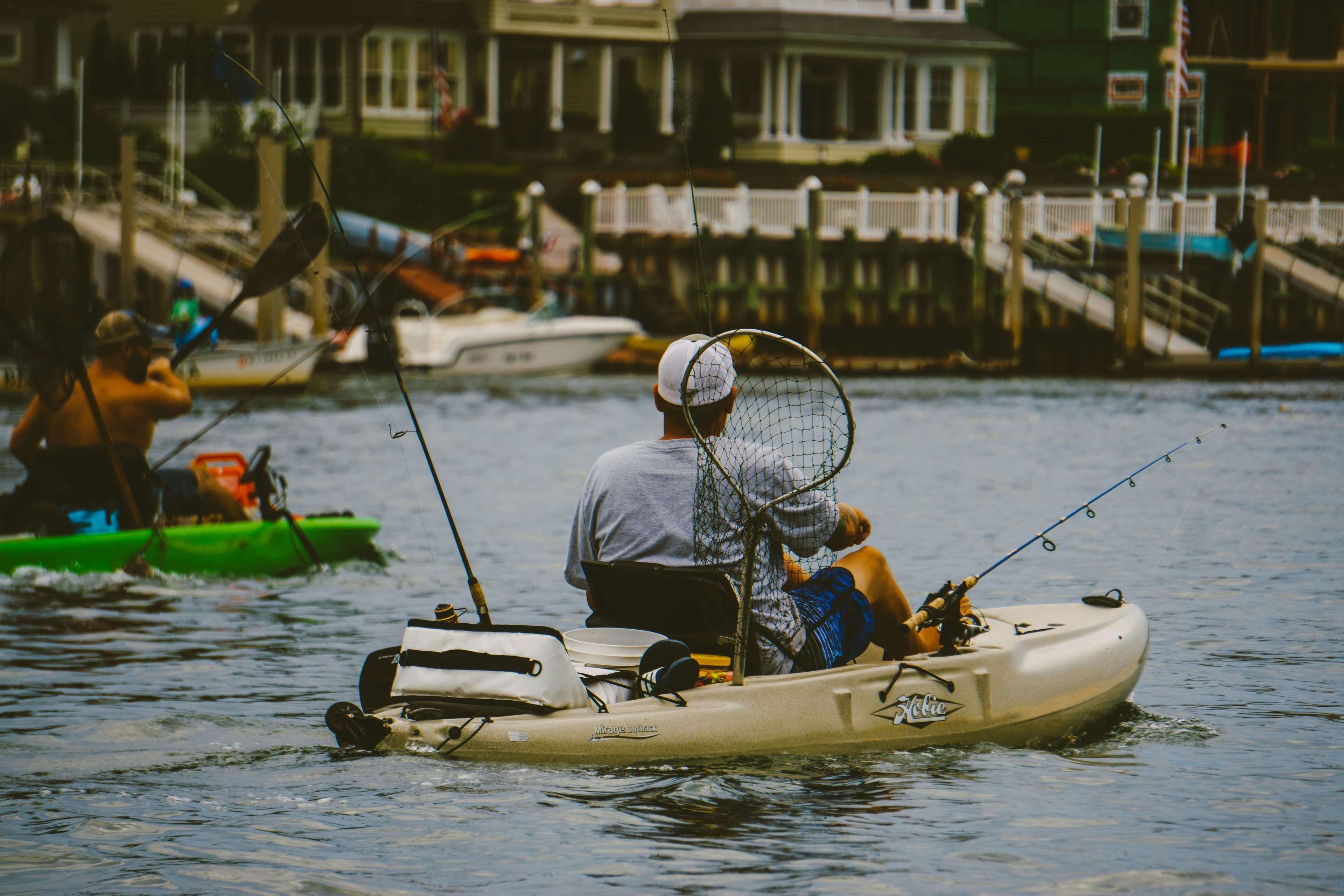
An anchor trolley fixes this. It's a rope-and-pulley system that runs bow-to-stern along your kayak's gunwale. Your anchor line clips to a ring that slides along this system. Slide the ring forward and your anchor point moves to the bow — you face downstream, into the wind, wherever you want. All without touching the anchor.
Cost: $16 to $62. Install time: under an hour. Result: you stay exactly where you want to be.
Here are the seven best anchor trolley kits for kayak fishing in 2026.
Quick Comparison
| Product | Rating | Price | Best For | Link |
|---|---|---|---|---|
| YakAttack LeverLoc | 4.8/5 | ~$50 | Best Overall | Check Price |
| YakGear AK1 Deluxe | 4.5/5 | ~$30 | Best Mid-Range | Check Price |
| Necmetu 316 Stainless | 4.3/5 | ~$20 | Best Saltwater Budget | Check Price |
| VEITHI Complete Kit | 4.2/5 | ~$18 | Best Budget Package | Check Price |
| YakAttack LeverLoc HD | 4.9/5 | ~$62 | Best Heavy-Duty | Check Price |
| Anchor Wizard LeverLock | 4/5 | ~$25 | Budget Lever-Style | Check Price |
| YYST Kit with Rope | 3.9/5 | ~$22 | Best for First-Timers | Check Price |
#1 Best Overall: YakAttack LeverLoc Anchor Trolley
4.8/5The LeverLoc has been the standard in kayak fishing anchor trolleys for years. No other kit has come close to dethroning it, and after seeing enough of the competition, it's easy to understand why.
The defining feature is the LeverLoc cleat itself — a flip-lever rope cam that lets you lock and release your anchor position with one hand in under a second. Squeeze the lever, slide the ring to where you want it, release. Done. When you're holding a rod with a fish on, or paddling against wind to reposition, one-handed operation isn't a luxury. It's the difference between staying on fish and drifting off them.
The rest of the kit matches the quality of the cleat. YakAttack's Stealth pulleys use sealed bearings, not open bushings — they stay smooth in grit and salt year after year. The 35-foot rope is reflective 550 paracord, which is an underrated detail: when you're rigging before a dawn launch, you can actually see what you're threading. The hardware is anodized aluminum and stainless, not powder-coated zinc that flakes off after a summer in the sun.
It installs in under 60 minutes on any sit-on-top with standard rigging holes. YakAttack has more community install guides, YouTube tutorials, and forum threads than any other brand on this list — you will not get stuck.
Best for: Anglers who fish regularly, deal with wind or current, and want to buy once. The premium over mid-range kits is worth it for the one-hand adjustment alone.
Pros
- LeverLoc flip-cleat: fastest one-handed position adjustment on the market
- Stealth pulleys with sealed bearings — smooth in sand, grit, and salt
- 35ft reflective paracord (visible before sunrise)
- Anodized aluminum and stainless hardware — won't rust or pit for years
- Enormous install community with tutorials for every major kayak model
Cons
- Most expensive standard kit on this list at ~$50
- LeverLoc mechanism has a short learning curve for first-timers
- Replacement LeverLoc cleats aren't cheap if you lose one
#2 Best Mid-Range: YakGear AK1 Deluxe Anchor Trolley Kit
4.5/5The YakGear Deluxe is what most kayak anglers actually buy. It's the most-reviewed complete kit in the $28–$35 range, and it earns that spot.
Out of the box: two Harken pulleys, one anchor ring, a zig-zag cam cleat, 30 feet of rope, and all the mounting hardware. Harken is a legitimate sailing hardware brand — their pulleys are a real step up from the generic plastic wheels in cheaper kits. The glass-fiber reinforced construction is genuine, not marketing language.
The cam cleat works well for setting your position and leaving it. Where it falls short compared to the LeverLoc: repositioning mid-session while managing a rod requires two hands. For anglers who set an anchor position once and fish it, this never comes up. For anglers constantly adjusting in changing wind, it gets old fast.
Saltwater note: Harken pulleys are marine-rated but not sealed bearings. Rinse them after every saltwater session and they'll last for years. Skip that habit and they'll stiffen within a season.
Best for: Freshwater and light brackish anglers who want a complete, proven kit without paying YakAttack prices.
Pros
- Everything included — no hardware store trips needed
- Genuine Harken pulleys (glass-fiber reinforced, real marine hardware)
- 45-60 minute beginner install with usable included instructions
- Thousands of verified reviews — well-understood product
- Compatible with most sit-on-top rigging setups
Cons
- Cam cleat adjustment requires two hands on the water
- Pulleys not sealed — needs rinsing after saltwater exposure
- 30ft rope is adequate but not reflective
#3 Best for Saltwater on a Budget: Necmetu 316 Stainless Heavy Duty Kit
4.3/5This is the sleeper pick on the list for anyone fishing in salt.
The Necmetu uses 316 marine-grade stainless steel on every piece of hardware that matters — the anchor ring, pad eyes, and carabiners. That's the same grade spec'd on offshore fishing boats. Most kits at this price use 304 stainless or anodized aluminum; 316 is meaningfully more corrosion-resistant in chloride environments like saltwater bays, tidal rivers, and coastal marshes.
Two things separate this kit from other budget stainless options. First, the paracord: 650-weight, 30 feet, included. That's thicker and stronger than the 550 cord in cheaper kits. Second, the elastic shock rings. These mount at the pad eyes and serve two purposes: they keep the trolley line taut against your hull when there's slack, and they absorb the jolt when your anchor catches hard while you're paddling with current. That impact travels through the system into your hull gelcoat over time — the rubber dampens it.
The pulleys are open bushing, not sealed. That's the main compromise at this price. Rinse them after saltwater exposure and they'll hold up.
Best for: Saltwater anglers fishing on a budget — bay fishing, tidal rivers, coastal kayaking. Better corrosion resistance than anything else at this price point.
Tip
Pick up an extra 15 feet of matching 650 paracord from any hardware store and splice it in. Having 45 feet total gives you full bow-to-stern travel with slack to spare on kayaks up to 14 feet.
Pros
- 316 marine stainless steel hardware — best corrosion resistance at this price
- Elastic shock rings protect your hull and keep trolley line taut
- 650 paracord included (stronger than standard budget kits)
- Dedicated saltwater design without the premium price
Cons
- Open bushing pulleys — rinse after every saltwater outing
- Sparse instructions; first-time install may take some trial and error
- Pulleys may stiffen with heavy salt exposure if not maintained
#4 Best Complete Budget Package: VEITHI Anchor Trolley Kit
4.2/5The VEITHI kit is the budget volume pick — usually under $20, and it covers everything you need to get rigged.
The 31-piece kit includes: zig-zag cleat, anchor ring, two carabiners, two pulleys, four pad eyes, and 30 feet of solid-braid cord. Unlike some budget kits that leave out components and force a second hardware order, this one is genuinely all-in-one. You drill the holes, run the rope, clip the ring, and you're fishing.
The 30-foot cord is 3mm solid braid — thinner than paracord and less grippy when wet, but it threads cleanly through the pulleys and holds fine under normal kayak anchor loads. The pulleys are anti-rust but not 316 grade marine stainless. For freshwater that doesn't matter at all. For heavy saltwater use, step up to the Necmetu.
Where this kit beats the Necmetu: the rope is included, so you're actually done after one purchase. Where it loses: lower hardware grade and the thinner cord. For a calm-lake freshwater angler, the difference is academic.
Best for: Freshwater anglers who want the lowest complete-kit price. Also works as a second kayak setup or a loaner rig.
Pros
- Under $20 for a complete 31-piece kit — genuinely all-in-one
- Rope included (unlike some budget stainless kits)
- Clean install with minimal tools
- Adequate hardware quality for freshwater use
Cons
- 3mm solid braid is thinner and less grippy when wet than paracord
- Hardware is not true marine-grade stainless — not for sustained saltwater
- Minimal instructions — watch a YouTube install before starting
#5 Best Heavy-Duty: YakAttack LeverLoc HD Anchor Trolley
4.9/5Same LeverLoc mechanism as the standard, with upgraded hardware throughout.
The HD version adds backing plates for both the LeverLoc cleat and the pulleys, plus two PadHooks for line management. Backing plates matter in one specific situation: heavier anchors (3+ lbs) in strong current put significant lateral load on the trolley over time. Without backing plates, standard mounting screws can work loose as that load cycles through the hull. Backing plates distribute force across a wider footprint and eliminate that failure mode.
The PadHooks are small additions that add up: they pin the trolley line flat against the hull while you paddle, stopping it from lifting and slapping. On a short lake paddle, a loose line is mildly annoying. On a 3-mile creek shuttle, it's a constant noise.
If you're fishing rivers with real current, open coastal water, or running anchors heavier than 2 lbs, this is the right kit. If you're fishing calm lakes and reservoirs, the standard LeverLoc is plenty and saves you $12–$15.
Best for: Anglers in strong current, open coastal water, or anyone using anchors heavier than 2 lbs.
Pros
- All the LeverLoc advantages plus backing plates for heavy-load installs
- PadHooks included for line management while paddling
- Best long-term durability of any kit on this list
- Rated for heavier anchors and stronger current than the standard version
Cons
- $12–15 more than the standard LeverLoc for features most lake anglers won't use
- Slightly longer install due to additional hardware
- Overkill for calm flatwater fishing
#6 Budget Lever-Style Alternative: Anchor Wizard LeverLock Kayak Trolley
4.0/5If the LeverLoc one-hand adjustment is what you want but $50 isn't in the budget, the Anchor Wizard LeverLock is the closest thing at ~$25.
The mechanism works on the same principle as the YakAttack — a flip-lever cam that locks the rope without tying off. The quality gap is real: the Anchor Wizard uses heavier plastic where YakAttack uses machined aluminum, and the pulleys are open bushing where YakAttack's are sealed bearings. But the core function — lock and release with one hand — works.
The kit includes 30 feet of paracord, carabiners, pulleys, pad eyes, and all mounting hardware. Complete kit, one purchase.
Realistic expectation: this holds up for freshwater anglers fishing 10–20 days a year. Heavy users and saltwater anglers will want to upgrade within a season or two. For the price, though, getting the one-hand adjustment over a cam cleat is worth the trade-off.
Best for: Freshwater anglers who want lever-style one-hand adjustment without the YakAttack price tag.
Pros
- One-handed lever adjustment at roughly half the cost of YakAttack
- Complete kit with paracord, hardware, and pulleys
- Gets the core adjustment function right at a budget price
Cons
- Plastic lever mechanism vs. machined aluminum in YakAttack
- Open bushing pulleys — less smooth, less durable long-term
- Not recommended for saltwater or heavy-load use
#7 Best for First-Timers: YYST Kayak Anchor Trolley Kit
3.9/5The YYST kit has been around longer than most of the competition on this list. It's a simple, well-documented system built for anglers who have never installed a trolley and want to learn the setup without spending much.
What sets it apart from other budget kits: the instructions are actual instructions. Not a QR code that 404s. YYST also has a long track record in kayak fishing forums where users have documented installs on nearly every major fishing kayak sold in the last decade. If you get confused mid-install, someone has already answered your exact question.
The hardware is entry-level — plastic pulleys, a zig-zag cleat, stainless ring. Works fine for calm freshwater. Not the right call for saltwater or serious current. Rope is included at 30 feet.
This is not the kit you'll be running in five years. It's the kit you'll use to understand how a trolley works, find your preferred ring position for your regular spots, and figure out which upgrade makes sense for you.
Best for: First anchor trolley install on a calm-water kayak. The learning platform before committing to premium hardware.
Pros
- Best included instructions of any budget kit on this list
- Long community track record with install guides for most popular kayaks
- Complete kit with rope included at an entry-level price
- Adequate for calm freshwater fishing
Cons
- Lowest hardware quality on this list
- Plastic pulleys not suited for saltwater or strong current
- Most users will want to upgrade within 1-2 seasons
What to Look for in a Kayak Anchor Trolley Kit
Hardware Material
The most important factor, especially for saltwater anglers.
316 Stainless Steel is the marine standard. Resists corrosion in saltwater far better than 304 stainless and significantly better than aluminum or zinc-plated hardware. If you fish tidal water, bays, or the coast, look for "316" stated explicitly — many kits say "stainless" without specifying the grade. The Necmetu kit on this list calls it out; others don't.
304 Stainless Steel handles freshwater without issue and holds up in light brackish exposure. Most mid-range kits use it. It'll rust faster in sustained saltwater without rinsing.
Anodized Aluminum is YakAttack's choice — lightweight, corrosion-resistant in most conditions, and can eventually pit in heavy saltwater if you don't rinse. A reasonable trade-off given the overall kit quality.
Powder-coated or zinc-plated steel — avoid. Surface rust appears within months of saltwater exposure, sometimes less.
Rope Length
Standard installations need 35–40 feet to cover most fishing kayaks (10–14 feet) with enough slack for the ring to travel full bow-to-stern. If your kayak is over 14 feet, measure your gunwale length before buying. Paracord in matching colors costs $1–2 per foot at any hardware store.
Pulley Type
Sealed bearing pulleys (YakAttack Stealth) rotate smoothly when fouled with sand, grit, or salt. They require almost no maintenance and stay consistent for years.
Open bushing pulleys (most other kits) work well when clean. Rinse after saltwater, lubricate once a season with silicone spray, and they'll last. Neglect maintenance and they stiffen. Not a dealbreaker — just a maintenance commitment.
Working load is rarely the limiting factor. Most budget pulleys far exceed the actual forces from a 2–3 lb kayak anchor.
Locking Mechanism
Flip-lever cam (LeverLoc style) — one hand, under one second. Best for solo anglers who reposition frequently. Worth paying for.
Zig-zag cam cleat — two hands, reliable hold. Ideal for anglers who anchor in one spot and fish it.
Standard cleat — nothing to break, slowest to adjust. Fine for set-and-forget anchoring.
If you fish solo and frequently reposition in wind or current, the flip-lever mechanism pays for itself in the first session.
Ease of Installation
Most kits go in within 45–90 minutes using a drill, pencil, and hex wrench. Sit-on-top fishing kayaks are the easiest — many have molded rigging points near the bow and stern that serve as natural pulley locations, no drilling needed. Sit-inside kayaks typically require drilling through the deck.
Info
Check your kayak's accessory page before you drill anything. Many sit-on-top fishing kayaks have factory rigging loops or scupper positions near the bow and stern purpose-built for trolley installs — you may not need to touch the hull.
Hull Compatibility
Polyethylene (plastic) kayaks accept self-tapping stainless screws directly. Add a small dab of marine sealant around the hole before driving the screw — it prevents water intrusion into the hull over time.
Fiberglass and composite hulls need backing plates to distribute the load. Without them, repeated anchor pulls can stress the hull around the mount points. The LeverLoc HD includes backing plates; standard kits don't.
How to Install an Anchor Trolley
If you've ever assembled flat-pack furniture, you can install an anchor trolley. The process is the same on almost every kit.
Tools needed:
- Drill with 3/16" or 1/4" bit
- Pencil or painter's tape for marking
- 3mm hex wrench (often included in the kit)
- Marine sealant (optional but worth it)
Steps:
- Mark pulley locations near the bow and stern, aligned along the gunwale
- Drill pilot holes and mount pulleys flush to the hull with included hardware
- Thread the rope through both pulleys to form a continuous loop
- Mount the cleat or LeverLoc mid-ship, within reach of your normal paddling position
- Thread rope ends through the cleat to close the loop
- Clip the anchor ring onto the rope loop
That's the whole system. Total time: 45–60 minutes on your first install, under 30 on your second.
Warning
Apply a small dab of 3M 4200 or equivalent marine sealant around each screw hole before driving it in if you're mounting through a hollow hull area. Not a structural concern — more of a long-term moisture management detail that prevents interior hull dampness over years.
Frequently Asked Questions
Do I need an anchor trolley, or just an anchor?
A bare anchor keeps you in one general area. An anchor trolley controls which direction you face. For fishing, direction matters more than most people realize — you want to present your bait consistently downwind or upstream, not wherever your bow happens to swing on a given gust.
What size anchor pairs with a trolley?
Most kayak anglers use a 1.5–3 lb folding grapnel. The trolley handles any anchor your line will support. The limiting factor is what you can safely deploy from a kayak, not the trolley hardware.
Can I install this on any kayak?
Sit-on-top fishing kayaks: easy, often without drilling. Sit-inside kayaks: doable, usually requires drilling the deck. Inflatable kayaks: use adhesive pad eyes rather than screwed mounts — some kits include them, most don't.
Does it work in fast current?
The trolley controls your angle; the anchor still has to hold. In faster current, use a heavier anchor (3–4 lb) with adequate scope — 7:1 line-to-depth ratio is a good starting point. Once the anchor holds, the trolley lets you face upstream without fighting the current with your paddle.
Will salt destroy a cheap kit?
Faster than you'd expect. Budget kits with 304 stainless or aluminum show surface rust within 6–12 months of regular saltwater use without rinsing. 316 stainless (Necmetu) holds up significantly longer in the same conditions. Rinsing any kit after every saltwater outing dramatically extends hardware life regardless of grade.
How do I reposition while anchored?
Loosen the cleat (or lever), slide the anchor ring to the new position along the rope, and lock it back. The anchor stays put — only your facing direction changes. Takes about five seconds with a LeverLoc, fifteen with a cam cleat.
Final Verdict
Most anglers should buy the YakAttack LeverLoc. It's the one kit where every component — cleat, pulleys, rope, hardware — is purpose-built for this application. The one-hand adjustment alone changes how you fish. You'll want it by the end of your first session in real wind.
If $50 doesn't fit right now, the YakGear AK1 Deluxe at ~$30 is a complete, proven kit that will serve a freshwater angler for years. Install it in an afternoon and go fishing.
Fishing saltwater on a budget? Necmetu 316 Stainless is the right call. The hardware grade is the one thing you can't retrofit later, and it's the only budget kit that gets it right.
| Use Case | Best Pick |
|---|---|
| Best overall, won't need to upgrade | YakAttack LeverLoc |
| Freshwater, complete kit, best value | YakGear AK1 Deluxe |
| Saltwater on a budget | Necmetu 316 Stainless |
| Budget but want one-hand adjustment | Anchor Wizard LeverLock |
| Lowest price complete package | VEITHI Kit |
| Heavy current or 3+ lb anchor | YakAttack LeverLoc HD |
| First install, learning the system | YYST Kit |
About The Bite Intel Team
The Bite Intel Team researches and curates the best kayak fishing gear based on extensive product analysis, angler community feedback, and manufacturer specs.
Related Posts
Best Rod Holders for Fishing Kayaks: 7 Tested Picks for Every Setup
Best rod holders for fishing kayaks reviewed and ranked: 7 picks from YakAttack, Scotty, and Railblaza for flush mount, track mount, and no-drill installs.
Best Cooler for Kayak Fishing in 2026 (6 Picks Reviewed)
The best coolers for kayak fishing — covering hard coolers, soft coolers, size, ice retention, and how to fit one on your kayak without sacrificing storage or stability.
Best Fish Finder for Kayak: 6 Units Tested for 2026
The best fish finders for kayak fishing — from the Garmin Striker 4 budget pick to the Deeper PRO+ castable sonar. Buyer's guide, mounting tips, and honest reviews.