Affiliate Disclosure:This article contains affiliate links. If you purchase through our links, we may earn a small commission at no extra cost to you. We only recommend gear we've tested or would genuinely use ourselves.
buying guide • May 13, 2026 • 18 min read · The Bite Intel Team
Best Life Jacket for Kayak Fishing: 6 PFDs Reviewed for 2026
The best life jackets for kayak fishing — from the Onyx MoveVent Dynamic to the NRS Chinook. Full reviews, USCG requirements explained, and a buying guide for fishing-specific PFDs.
A regular life jacket and a fishing PFD are not the same thing. If you've ever tried to cast all day in a standard foam life vest, you know why — the bulk under your arms restricts your casting motion, there's nowhere to put your pliers, and you end up taking it off and draping it over your bow bungee where it's completely useless if you capsize.
Fishing-specific PFDs solve all of that. They're designed around the movements of an angler: low-profile foam that doesn't interfere with casting, large arm holes for full range of motion, front pockets positioned for quick access to tackle and tools, and often a tow belt loop for rescue situations.
This guide covers the best options at every price point and explains what separates a genuinely good kayak fishing PFD from a basic foam vest with an extra pocket.
Warning
Wear your PFD every time you're on the water. A life jacket hanging from your bungee cord won't help if you're unconscious after a capsize. There is no exception to this rule.
Why Fishing PFDs Are Different
Standard recreational PFDs are designed for paddling — they work, but they're not optimized for fishing. A fishing-specific PFD adds:
Pockets: Multiple front and side pockets positioned for one-handed access while seated. Pliers, split rings, forceps, a license holder, snacks — everything within reach without opening a bag.
Arm mobility: Fishing PFDs have larger arm openings and cut-away panels under the arms specifically for casting. The difference in casting comfort between a standard vest and a fishing vest is dramatic.
Tow belt: A D-ring or tow belt loop on the back for attaching a rescue tow system. Important for anglers who paddle with others or in technical water.
Ventilation: Mesh panels and ventilation channels on the back keep you cooler on warm-weather sessions. On a sit-on-top kayak in July, this matters.
Rod holder loops: Some fishing PFDs include loops or attachment points for net releases, tool tethers, and other fishing accessories directly on the vest.
Best Kayak Fishing PFDs: Quick Comparison
| Product | Rating | Price | Best For | Link |
|---|---|---|---|---|
| Onyx MoveVent Dynamic | 4.5/5 | $60–$80 | Best overall value | Check Price |
| NRS Chinook Fishing PFD | 4.7/5 | $130–$160 | Best feature set / serious anglers | Check Price |
| Stohlquist Fisherman PFD | 4.5/5 | $120–$150 | Best comfort for long days | Check Price |
| Mustang Survival MIT 100 | 4.2/5 | $100–$130 | Best manual inflatable / warm water | Check Price |
| Astral V-Eight Fisher | 4.6/5 | $180–$220 | Best premium foam / standing and casting | Check Price |
| Onyx A-24 Auto Inflatable | 4.1/5 | $80–$120 | Best auto-inflatable / slim profile | Check Price |
#1 Best Overall Value: Onyx MoveVent Dynamic
4.5/5The Onyx MoveVent Dynamic is the PFD most kayak anglers end up recommending to beginners — and keep using themselves. At $60–$80, it delivers a legitimate fishing-specific feature set at a price that's hard to argue with.
The ventilation system is the headline feature: foam panels on the back are segmented with channels that allow air to flow between your back and the vest. On warm days, this keeps you dramatically cooler than a solid-panel foam PFD. It doesn't replace a mesh back, but it's a meaningful step up.
Arm openings are generously sized for casting. Two large front mesh pockets and a lower zippered pocket hold pliers, forceps, a license, and small tackle. The vest uses a single front zipper closure with a buckle at the bottom — easy to get in and out of, especially with wet hands.
Fit is consistent across sizes. It runs slightly trim, so if you're between sizes, size up. It adjusts at the sides for a snug fit without bulk.
Pros
- Best price-to-feature ratio on this list
- Ventilated back keeps you cooler on warm-weather trips
- Large arm openings — excellent casting mobility
- Three accessible front pockets
- Easy front zipper + buckle closure
- USCG Type III certified
- Available in men's and women's cuts
Cons
- Fewer pockets than the NRS Chinook
- No tow belt or rescue tow attachment
- Ventilation panels are not as open as a full mesh back
- Runs slightly trim — size up if between sizes
#2 Best for Serious Anglers: NRS Chinook Fishing PFD
4.7/5The NRS Chinook is the standard by which fishing PFDs are measured. It has more pockets than most anglers will ever fill, a built-in tow belt, rod holder/tool attachment loops, and a large mesh back that provides better ventilation than any solid-panel vest. If you spend full days on the water and want everything organized and accessible without opening a separate bag, the Chinook is the benchmark.
The pocket layout is thoughtful: two large front zippered pockets (large enough for fly boxes or thick tackle organizers), two upper chest zippered pockets for quick-access items, and inner pockets on the sides. A ruler strip on one pocket edge. Lash tabs and D-rings throughout for clipping tools.
The tow belt is integrated — a quick-release buckle at the lower back that holds a rescue tow line. For anglers who paddle with less experienced partners or fish technical water, this is a genuine safety tool.
The mesh back panel provides maximum airflow — the NRS Chinook is noticeably cooler on hot days than foam-back designs. The large arm openings and segmented foam panels allow full casting range.
At $130–$160, it's a significant jump from the Onyx MoveVent. But if you fish seriously and often, the Chinook earns its price.
Pros
- Best pocket layout in the category — organized access to everything
- Integrated tow belt for rescue situations
- Full mesh back for maximum ventilation
- Lash tabs and D-rings for tool/net attachment throughout
- Rod holder loops for managing rods during breaks
- Excellent casting range of motion
- Built to last — NRS quality is industry-standard
Cons
- Most expensive foam PFD on this list
- Pockets are almost too many — can become overstuffed and bulky if you overload them
- Sizing is specific — measure your chest carefully before ordering
#3 Best Comfort for Long Days: Stohlquist Fisherman PFD
4.5/5Stohlquist is a respected PFD brand among paddle sports anglers, and the Fisherman is their flagship fishing vest. What distinguishes it from the Onyx and NRS options is the foam segmentation — Stohlquist uses multiple independent foam panels that flex independently with your body, reducing the stiff "board" feeling that plagues cheaper vests.
Over a long fishing day, this flexibility difference becomes real. The Fisherman moves with you rather than against you. Anglers who wear it for 6+ hours report less fatigue and chafing than comparable vests.
The feature set is competitive: multiple front pockets, a large zippered lower pocket, mesh panels for ventilation, large arm openings, and a U-neck front closure that's comfortable and low-profile. A hydration tube port on one shoulder strap allows you to run a tube from a water reservoir in the front pocket without fumbling.
At $120–$150, it sits between the Onyx and the NRS Chinook. The lack of an integrated tow belt is the notable omission at this price.
Pros
- Best all-day comfort of any foam PFD on this list
- Independently segmented foam panels flex with body movement
- Mesh ventilation panels for airflow
- Hydration tube port — run a tube from a reservoir inside
- Multiple front pockets with good access
- Full casting range of motion
Cons
- No integrated tow belt
- Slightly fewer pockets than the NRS Chinook
- Less widely available than Onyx or NRS options
#4 Best Manual Inflatable: Mustang Survival MIT 100
4.2/5Inflatable PFDs are fundamentally different from foam PFDs. When not inflated, they're slim, lightweight vests that feel almost like wearing a thin jacket. They provide full arm mobility for casting and don't restrict movement in any direction. The trade-off: you have to inflate them manually (pull a cord) or wait for auto-inflation (see the A-24 below).
The Mustang MIT 100 is a manual inflatable — you pull the inflation handle to deploy it. This makes it appropriate for anglers who are confident swimmers in calm to moderate conditions. If you fall in, you need to remember to pull the handle before you sink.
The profile is extremely slim compared to any foam PFD — no bulky panels in front, nothing under the arms. For warm weather fishing where heat is your primary concern, the MIT 100 is the most comfortable option on this list.
Warning
Inflatables are NOT appropriate for non-swimmers, children, in rough or fast-moving water, or when unconsciousness from impact is possible. In any of these conditions, use a foam PFD.
The MIT 100 uses a CO2 cylinder for inflation — the same size used in most manual PFDs. Replacement cylinders and re-arming kits are widely available. Inspect the bladder annually for leaks.
Pros
- Extremely slim profile — minimal restriction in warm weather
- Full casting range of motion — no foam panels under the arms
- Lightweight — barely noticeable to wear
- USCG Type III certified (when properly maintained and worn correctly)
- Easy to re-arm after deployment
Cons
- Manual inflation only — you must pull the handle when in the water
- Not appropriate for non-swimmers, rough water, or whitewater
- Requires annual inspection and periodic re-arming
- No pockets — you'll need a fishing pack or vest for gear access
#5 Best Premium Foam PFD: Astral V-Eight Fisher
4.6/5The Astral V-Eight Fisher is the choice of serious kayak anglers who want the best foam PFD available under $250. Astral builds their foam PFDs with Gaia foam — a plant-based foam material that's softer, lighter, and more packable than standard PVC foam. The result is a vest that's notably lighter and more comfortable than competitors at the same buoyancy rating.
The V-Eight design prioritizes standing casting position — the foam is distributed in front panels that stay out of your way when you're standing and swinging a rod. Large arm openings and a wide front cutaway give you unrestricted overhead casting. If standing-and-casting from a kayak is a significant part of your fishing style, the Astral V-Eight is purpose-built for it.
The pockets are minimal compared to the NRS Chinook — two front zippered pockets and a couple of lash tabs. Anglers who want to carry lots of gear in their vest may prefer the Chinook's organizational capacity. Anglers who want maximum freedom of movement in a premium foam PFD will prefer the Astral.
Pros
- Gaia plant-based foam is lighter and softer than standard PVC foam
- Best casting freedom of any foam PFD on this list
- Purpose-designed for standing and overhead casting
- Premium fit and finish quality
- Front-entry zip with single closure — fast on and off
Cons
- Fewer pockets than the NRS Chinook — less gear organization
- Most expensive option on this list
- No tow belt
- Less widely available than Onyx or NRS
#6 Best Auto-Inflatable: Onyx A-24 Automatic Inflatable
4.1/5The Onyx A-24 is an auto-inflatable PFD — the CO2 cylinder deploys automatically when the bladder is submerged in water. You don't have to do anything. If you go overboard and don't have the presence of mind or ability to pull a manual handle, the A-24 inflates on its own.
The slim profile when uninflated is similar to the MIT 100 — minimal bulk, maximum arm freedom. As a Type V device (classified as automatic inflatable), it must be worn (not stored) to count as your required PFD under USCG regulations.
The auto-inflation mechanism requires the most careful maintenance of any PFD on this list. The water-activated bobbin (the mechanism that triggers auto-inflation) can be triggered by heavy rain or submersion while not needed. It needs to be inspected and replaced regularly according to the manufacturer's schedule.
Pros
- Auto-inflates upon water submersion — most effective if incapacitated
- Extremely slim uninflated profile
- Full casting range of motion
- More affordable than many auto-inflatables
Cons
- Auto-inflation mechanism requires careful maintenance and regular bobbin replacement
- Can be accidentally triggered in heavy rain or spray
- Not appropriate for non-swimmers or rough water without caution
- Must be worn (not stowed) to count as required PFD under USCG rules
- No pockets — separate gear management required
Kayak Fishing PFD Buying Guide
USCG Type III vs. Inflatable: Which Is Right for You?
Type III Foam PFD: The standard for recreational kayaking and kayak fishing. Keeps you face-up in calm water. Works automatically — no deployment needed. Can be worn by non-swimmers. Works even if you're unconscious (though it won't reliably flip an unconscious wearer face-up in all conditions). The right choice for most kayak anglers.
Manual Inflatable: Slimmest profile, most comfortable, least restrictive. Must be manually deployed. Only appropriate for capable swimmers in calm, open water conditions. Requires regular maintenance. Not suitable for rough water, whitewater, or non-swimmers.
Automatic Inflatable: Same benefits as manual but deploys without input. Still not appropriate for rough water or non-swimmers. Requires the most maintenance of all PFD types. Best for calm open water anglers who want maximum comfort.
Recommendation for beginners: Get a Type III foam fishing PFD. Reliable, zero maintenance, works without any action on your part.
Fit and Sizing
A PFD that doesn't fit isn't a PFD — it's a hazard. A too-loose vest can ride up over your face in the water. Key fit points:
- Chest size: Measure across the fullest part of your chest. PFD sizing is chest-based, not shirt size.
- Lift test: Fasten the PFD and have someone lift it by the shoulder straps. It should not rise above your chin or ears.
- Arm mobility: With the PFD fastened, make a full casting motion. If it binds or restricts, it's the wrong size or wrong model.
- Bottom clearance: When seated in your kayak, the bottom of the vest shouldn't dig into your lap.
Pockets: How Much Organization Do You Need?
The right number of pockets depends entirely on how you fish. A minimalist angler who keeps tackle in a crate and only carries forceps and a knife needs 2–3 pockets max. A lure angler who wants split rings, pliers, a measuring tape, lip grippers, and extra hooks all accessible without reaching back needs the NRS Chinook's extensive organization.
Don't overload pockets. A heavily stuffed fishing vest becomes uncomfortable, restricts movement, and makes the vest harder to close and adjust.
Tow Belts and D-Rings
A tow belt is a safety tool that lets one paddler tow another in an emergency. It's most relevant for anglers who regularly paddle with beginners, trip in groups, or fish technical water. If you consistently fish solo on calm water, it's a lower priority. If you guide, fish with a partner regularly, or paddle anywhere currents or conditions can create separation situations, a tow belt is worth having.
D-rings and lash tabs for attaching nets, forceps, and tools are convenient on any fishing vest. A magnetic net release clipped to a D-ring is a common setup.
Arm Mobility: Why It Matters for Casting
Standard recreational PFDs cut the arm opening high and keep foam panels close to the underarm area. This is fine for paddling, where your arm movement is primarily forward and back. For casting — especially overhead casting, sidearm casting, or roll casting with a fly rod — this restriction becomes immediately noticeable.
Fishing PFDs cut the arm opening lower and push the foam panels further forward (toward the front of the chest), clearing the underarm area entirely. If casting mobility is important to you, don't buy a recreational PFD for fishing and assume it'll work fine. It won't.
Legal Requirements for Kayakers (USCG)
In the United States, the Coast Guard requires:
- One USCG-approved PFD for each person on board. For kayaks, this means one per paddler.
- PFDs must be the appropriate size for the person wearing them (adult, child sizing matters).
- Inflatable PFDs (Type V) must be worn to count as your required PFD — stowed inflatables don't comply.
- Children under 13 must wear their PFD at all times on the water in most states (state laws vary — check your state).
- Throwable device (Type IV): Required on motorized vessels 16 feet and over. Not required for kayaks.
State laws can add requirements beyond federal minimums. Many states require kayakers to wear PFDs between October and May (cold water season). Check your state's boating regulations before assuming federal minimums apply.
Frequently Asked Questions
Q: Do I have to wear a life jacket while kayak fishing?
Legally, you must have a USCG-approved PFD accessible on board for each person — but federal law doesn't require adults to wear it (state laws vary). Practically: yes, wear it. A capsize is unpredictable. The value of a PFD hanging off your bow bungee is zero. Wear it every time.
Q: Can I fish in an inflatable PFD?
Yes, many kayak anglers use inflatables for their comfort advantage. Manual inflatables (MIT 100) are appropriate for confident swimmers on calm water. Auto-inflatables (A-24) are better for anglers who want the same protection as foam but in a slim package. Neither is appropriate for rough water, moving water with hazards, or non-swimmers.
Q: What's the difference between Type I, II, III, and V PFDs?
Type I (offshore life jacket): Maximum buoyancy, designed to turn unconscious wearers face-up. Bulky. For open ocean/survival use. Type II (near-shore vest): Less bulky than Type I, some face-turning capability. For calmer inshore water. Type III (flotation aid): Designed for calm water, minimal face-turning ability, most comfortable for water sports. The standard for kayaking. Type V (special use): Inflatables when properly maintained and worn. Some paddle-specific devices also fall here.
For kayak fishing: Type III or Type V (inflatable worn).
Q: How do I care for my PFD?
Rinse with fresh water after salt water use. Allow to dry completely in shade before storing — UV degrades foam, and mold grows in stored wet PFDs. Store loosely (don't compress the foam). Inspect the zippers, buckles, and foam annually. Inflatables need annual inspection of the CO2 cylinder and bobbin per manufacturer specs.
Q: How often should I replace my PFD?
Foam PFDs don't have a set expiration date — inspect the foam for permanent compression, cracking, or waterlogging. If you compress the foam and it doesn't spring back, it's degraded. Most quality foam PFDs last 5–10+ years with proper care. Inflatables: replace the CO2 cylinder and bobbin per manufacturer schedule (typically annually) and replace the vest if the bladder is compromised.
Q: What's a good PFD for hot weather?
The mesh-back NRS Chinook, the foam-segmented Stohlquist Fisherman, or any inflatable (MIT 100 or A-24) are the best choices for heat. Full mesh backs provide the most airflow. Inflatables provide the least thermal restriction but require more careful maintenance and use conditions.
Final Verdict
| Product | Rating | Price | Best For | Link |
|---|---|---|---|---|
| Onyx MoveVent Dynamic | 4.5/5 | $60–$80 | Best value / beginners | Check Price |
| NRS Chinook Fishing PFD | 4.7/5 | $130–$160 | Best features / serious anglers | Check Price |
| Stohlquist Fisherman PFD | 4.5/5 | $120–$150 | Best all-day comfort | Check Price |
| Mustang Survival MIT 100 | 4.2/5 | $100–$130 | Best manual inflatable / warm water | Check Price |
| Astral V-Eight Fisher | 4.6/5 | $180–$220 | Best premium / standing cast | Check Price |
| Onyx A-24 Auto Inflatable | 4.1/5 | $80–$120 | Best auto-inflatable | Check Price |
Buy the Onyx MoveVent Dynamic if you're looking for the best balance of features and price. It handles the vast majority of kayak fishing situations well and won't strain your budget.
Buy the NRS Chinook if you fish frequently, want maximum organization on the water, and want a vest that will hold up for years of hard use.
Buy the Stohlquist Fisherman if comfort during long sessions is your top priority.
Buy the Astral V-Eight if you stand-fish from your kayak and want the most freedom of movement in a foam PFD.
Buy an inflatable if you're fishing calm warm water, are a strong swimmer, and prioritize the lowest possible profile and heat.
Whatever you choose: wear it.
Related Posts
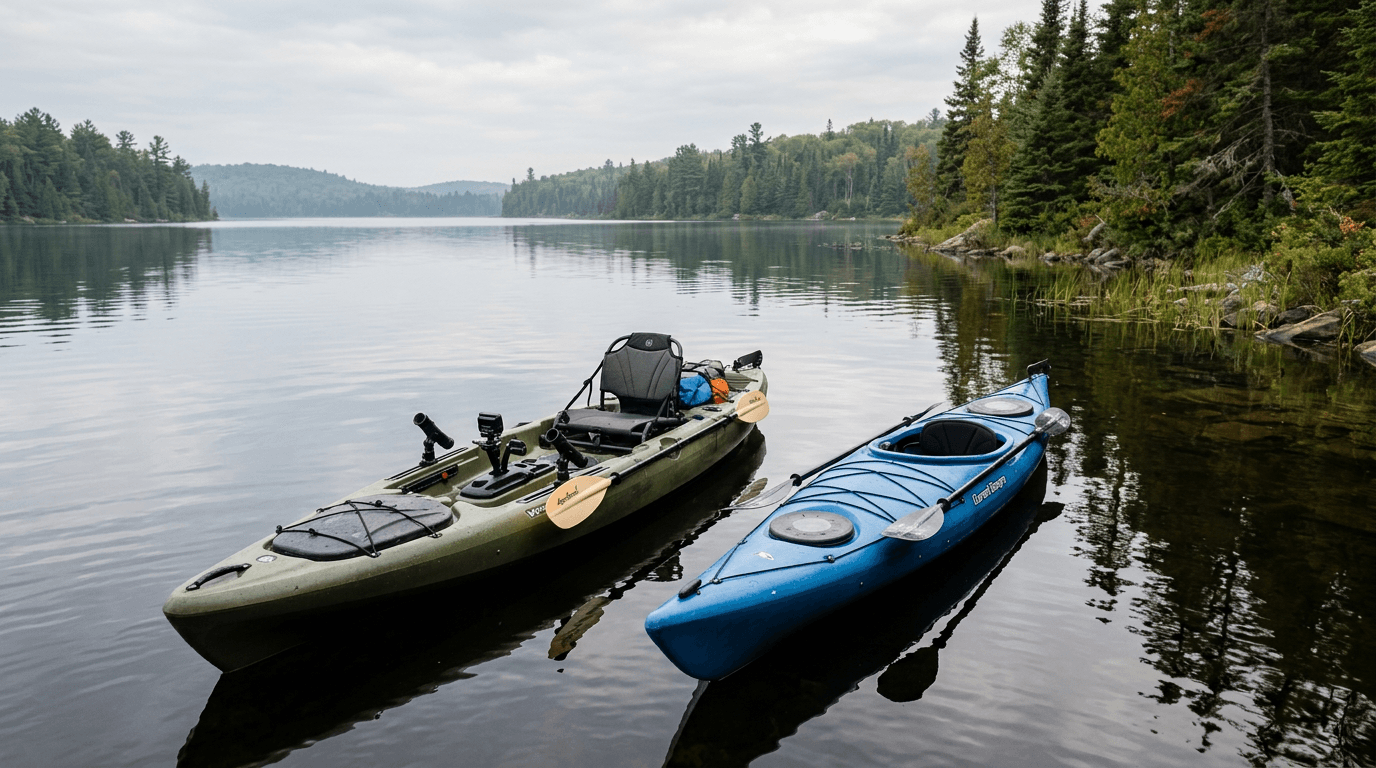
Angler Kayak vs Regular Kayak: 7 Key Differences That Change How You Fish
Angler kayak vs regular kayak — the real functional differences in stability, storage, speed, and cost. Plus whether your regular kayak is worth converting.
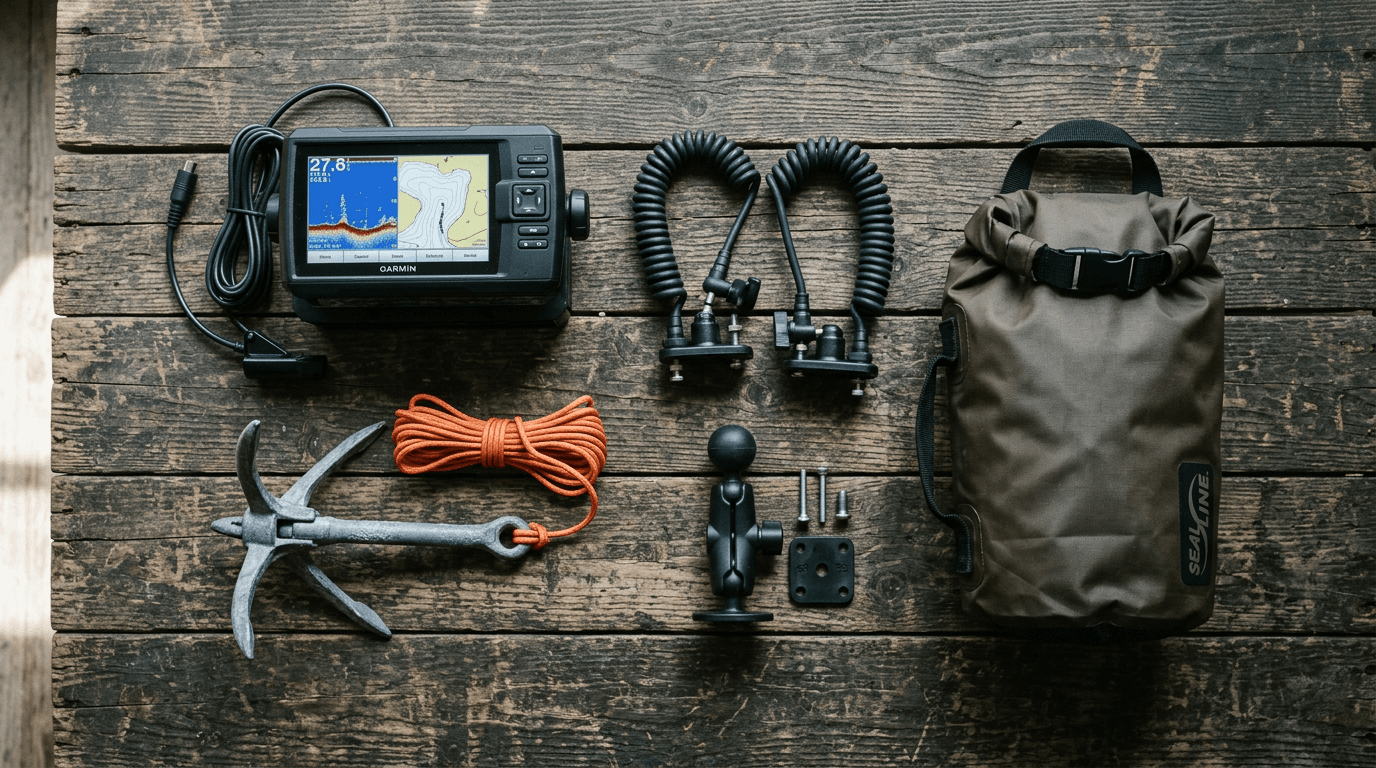
Fishing Kayak Attachments: The Complete Rigging and Mounting Guide
Best fishing kayak attachments explained — track systems, rod holders, fish finder mounts, anchors, and storage. What to buy, where to mount it, and how.
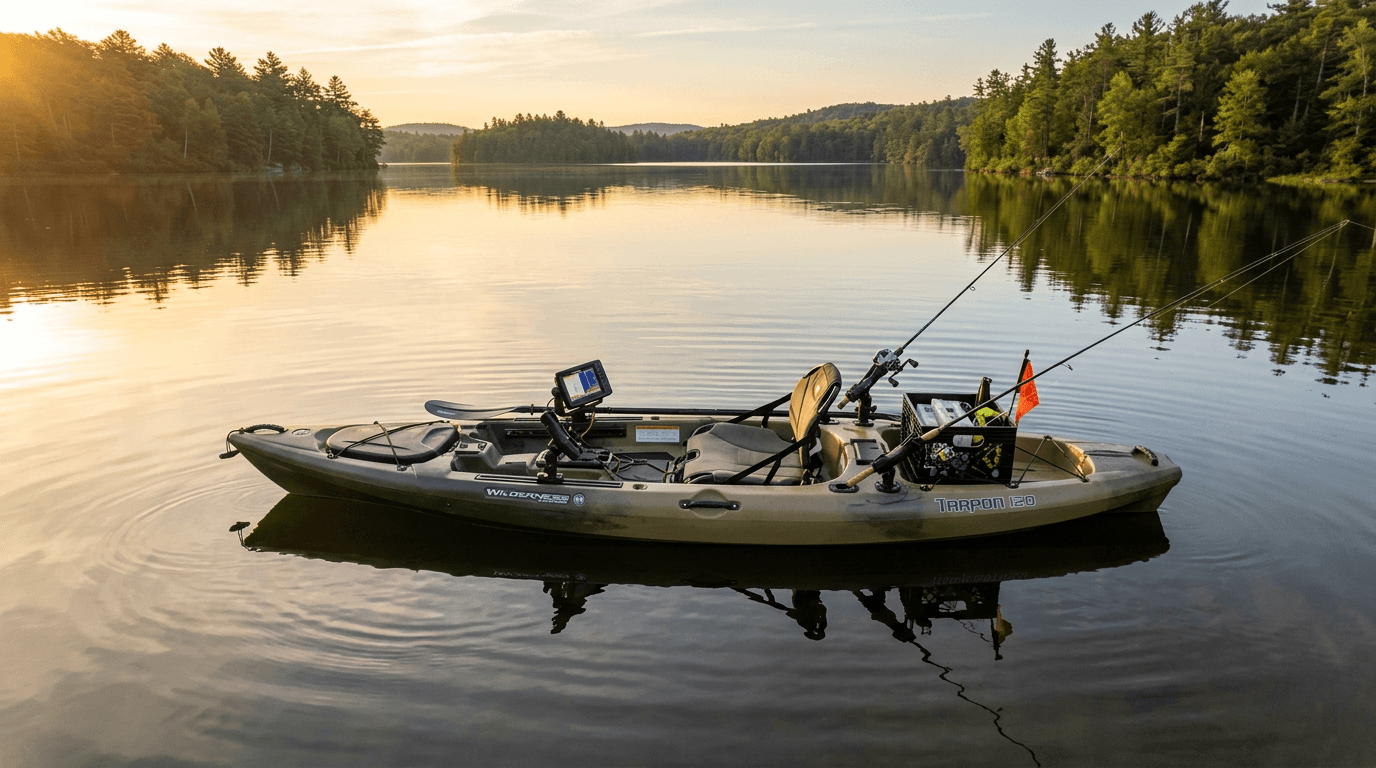
Kayak Fishing Accessories: What to Buy First, What to Skip, and How to Build the Right Setup
Which kayak fishing accessories are worth buying? We break down every category by priority and budget — rod holders, anchors, fish finders, and more.