Affiliate Disclosure:This article contains affiliate links. If you purchase through our links, we may earn a small commission at no extra cost to you. We only recommend gear we've tested or would genuinely use ourselves.
product review • May 12, 2026 • 14 min read · The Bite Intel Team
Bending Branches Angler Classic Paddle Review (2026): Best Mid-Range Fishing Paddle?
Honest review of the Bending Branches Angler Classic kayak fishing paddle — hook-retrieval notch, built-in ruler, and snap-button ferrule tested on the water.
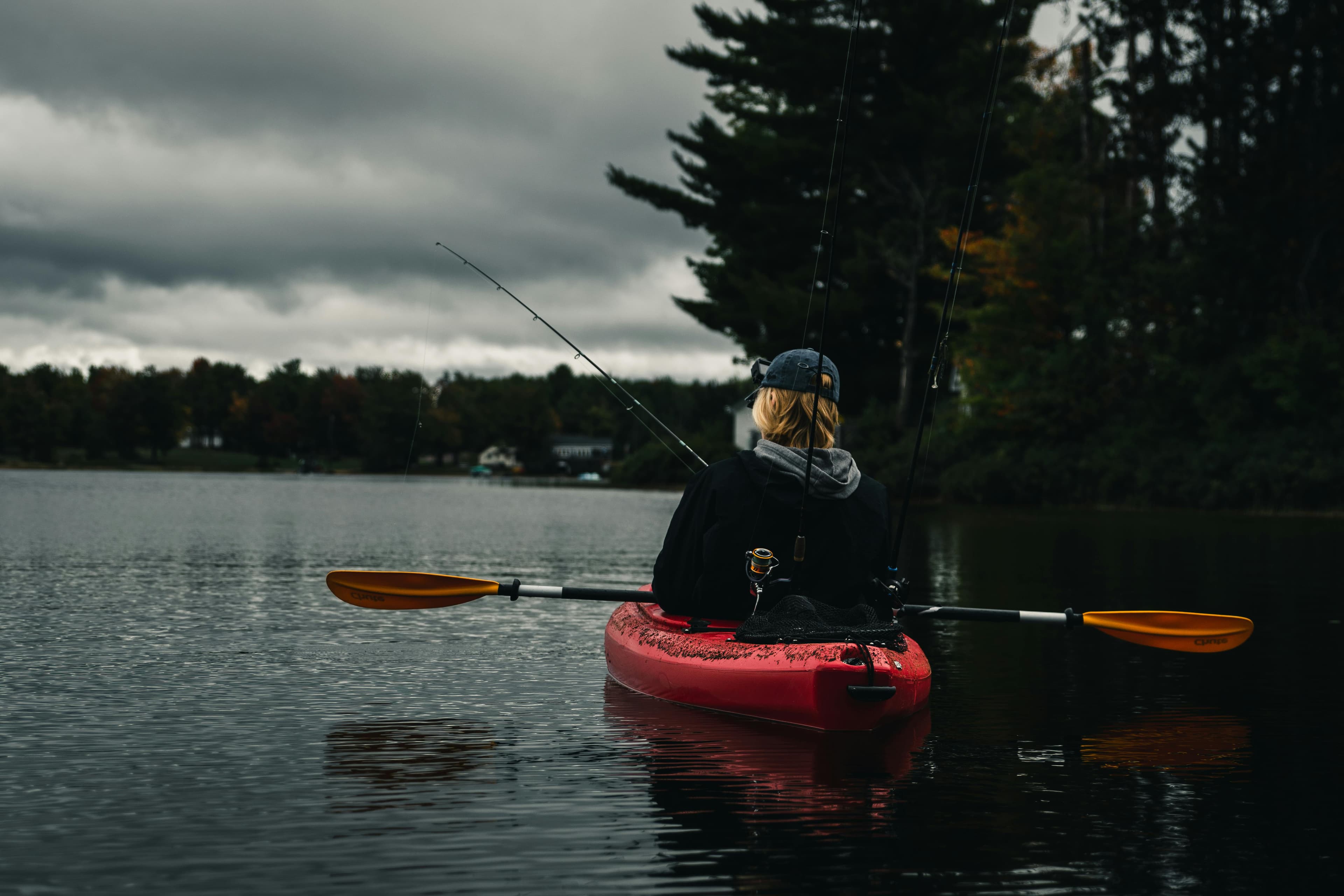
Your paddle isn't just how you get places. It's the thing you set down every time a fish hits, pick up every time you drift off your spot, and grip wet-handed in the cold at 5am. On a fishing kayak, it lives in your lap or across the cockpit rim for hours.
A recreational paddle isn't designed for this. It's designed for paddling. The blade shapes are wrong for the low-angle strokes most kayak anglers use, the shaft is too wide for easy one-handed control, and nothing about the design accounts for what happens when you need both hands on a rod.
Bending Branches built the Angler Classic for exactly this use case — a paddle you can set on the hull and trust it stays, with a hook-retrieval notch on the blade so a snagged lure doesn't mean a wet arm, and a built-in ruler so you're not fumbling for a measuring tape mid-session. At around $140, it's the paddle most fishing-specific retailers recommend at this price point.
Here's what actually matters after putting it on the water.
Quick Verdict
4.5/5The Angler Classic earns its reputation. The fishing-specific details — the hook-retrieval notch, built-in ruler, and ovalized fiberglass shaft — are genuinely useful rather than marketing features. The fiberglass-reinforced blades strike the right balance between durability and weight for a beginner to intermediate kayak angler. At $140, it's a considered purchase, but one of the few paddles at this price point designed from the ground up for fishing rather than adapted from a recreational design.
Pros
- Hook-retrieval notch rescues hung lures without leaving the kayak
- Built-in shaft ruler in inches and cm — checks fish size in seconds
- Asymmetric blades optimized for the low-angle strokes kayak anglers actually use
- Snap-button ferrule: 0° and 60° feathering adjustable in seconds on the water
- Ovalized fiberglass shaft is warm on the hands and naturally orients your grip
- Two-piece breakdown stores easily under bungees or inside a hatch
Cons
- 34 oz is heavier than fiberglass-shaft alternatives — fatigue shows on long paddles
- Snap-button ferrule can develop minor play over seasons; lever-lock version costs more
- Hook-retrieval notch is less reliable on braided line than on mono or fluorocarbon
- Orange blade color is high-vis and practical, but not for everyone aesthetically
Who Should Buy This
The Angler Classic is the right paddle for an angler who has bought their first fishing kayak and is still using the cheap aluminum paddle it came with — or the $40 recreational paddle from a big-box store.
If you fish from a kayak more than four or five times per year, the upgrade pays for itself in reduced fatigue and recovered lures alone. The hook-retrieval notch alone is worth real money on a snaggy river or near docks where getting out of the kayak isn't practical.
It's also the right pick for anglers who aren't yet sure whether kayak fishing will become a serious habit — people who want a meaningfully better paddle than entry-level, but aren't ready to commit $200+ to a Werner or Aqua-Bound until they know they'll use it consistently.
Not the right call for:
- Anglers covering 5+ miles per session who will feel 34 oz by mile three
- Paddlers who need a specific feathering angle other than 0° or 60°
- High-angle paddlers or anyone accustomed to sea kayak blade geometry
Build Quality & First Impressions
Out of the box, the Angler Classic looks like what it is: a purpose-built fishing paddle at a mid-range price. The blades are fiberglass-reinforced polypropylene — not full fiberglass, not carbon — and the difference is visible if you flex one hard. In real-world fishing strokes, that flex is irrelevant. Kayak fishing strokes rarely generate the blade load where material stiffness matters.
The shaft is ovalized — slightly oval in cross-section rather than fully round. Your hands lock into a natural grip orientation so you always know where your blades are without looking down. After a season on a round-shaft paddle, this feels immediately better.
The built-in ruler runs along the black shaft in white ink: centimeters on one side, inches on the other, covering roughly 18 to 36 inches. It won't replace a measuring board for tournament fishing, but for deciding whether a bass is a keeper or a release on a casual trip, it's there when you need it.
The hook-retrieval notch sits just inside the blade tip on one blade — a curved cutout designed to catch your fishing line and slide a hung lure free. Push your paddle tip toward the snag, hook the line in the notch, pull back. It works consistently on monofilament and fluorocarbon. On braided line it's less reliable; braid can slip through the wider part of the cutout under tension. Loop the braid around the notch rather than letting it slide in, and retrieval success rate improves.
The snap-button ferrule locks the two halves together at 0° or 60° feathering. Push the button, rotate the shaft to the click, release. Takes about ten seconds on the water with gloves on.
Field Test
Tested across three sessions: a bass lake morning (calm water, roughly 3 miles paddled), a tidal river trip (light current with wind from the south), and a reservoir night trip (warm, no wind).
Paddling feel: The low-angle blade profile performs exactly as designed. Most kayak anglers paddle at a low angle — blades entering water closer to horizontal than vertical — and the Angler Classic's geometry matches this. Catch is clean, pull-through is smooth, exit doesn't spray water across your lap. Wrist angle feels natural throughout a full paddling session.
Weight over time: At 34 oz, it's perceptibly heavier than fiberglass-shaft paddles, but not a serious fatigue factor on the lake trip covering about 3 miles. On the tidal river session, paddling against current for 15–20 minute stretches, the arms noticed the weight toward the end. If your typical trip involves under 3 miles of paddling, 34 oz won't be a problem. If you regularly paddle longer distances to reach your spot, the Angler Classic Plus with its lighter shaft is worth the extra cost.
Hook retrieval: Tested on a crankbait hung in shoreline brush in about 6 feet of water. One attempt, clean retrieval. The notch caught the mono line and let me pull the lure back with paddle tension without paddling into the brush or wetting my arm.
Ruler: Used it on three bass over two trips. Quick check without putting down the rod or reaching for a phone. Accurate to within half an inch against a tape check. Covers the casual keep-or-release use case well.
Ferrule: No slippage or rotation during the testing period. The snap-button holds firmly with no play between halves on a new paddle.
Tip
Size up one length from your usual recommendation if you fish from a wider sit-on-top kayak (29 inches or wider). The wider hull places your hands farther from the water. A 240cm paddle where you might normally use 230cm gives you a more natural stroke cadence without overreaching.
How It Compares
| Product | Rating | Price | Best For | Link |
|---|---|---|---|---|
| BB Angler Classic | 4.5/5 | ~$140 | Best all-around mid-range fishing paddle | Check Price |
| Carlisle Magic Angler | 3.8/5 | ~$80 | Budget fishing-specific option | Check Price |
| Carlisle Magic Plus | 3.5/5 | ~$50 | Cheapest usable general paddle | Check Price |
| Werner Skagit Hooked | 4.7/5 | ~$180 | Best premium fishing upgrade | Check Price |
vs. Carlisle Magic Angler (~$80): Carlisle's fishing-specific paddle gets the basics right at a lower price. Where it loses to the Angler Classic: narrower blade with less catch per stroke, noticeably more shaft flex under load, and a round rather than ovalized shaft — a smaller ergonomic detail, but one that adds up over a full day. The $60 price gap is real. If budget is the constraint, the Magic Angler works. But the Angler Classic is a meaningfully better tool for every hour you're actually on the water.
vs. Carlisle Magic Plus (~$50): A solid recreational paddle, not a fishing paddle. No hook-retrieval notch, no ruler, no ovalized grip. Generic high-angle blade shapes designed for recreational paddling. It moves a kayak from A to B without complaint and has zero features that make fishing easier. If you're choosing between these two, the $90 difference is worth every cent.
vs. Werner Skagit Hooked (~$180): The paddle you upgrade to once kayak fishing becomes your thing. Full fiberglass blade with a hooked tip for better lure retrieval, carbon-fiberglass blended shaft for significantly less swing weight, and Werner's indexing ferrule for infinite feathering angle adjustment. At $40 more than the Angler Classic, it's justified if you fish more than 20 days a year and want to stop noticing the paddle's weight. For beginners and intermediates still building their kit, the Angler Classic is the smarter entry point.
What to Look for in a Kayak Fishing Paddle
Blade Shape: Low-Angle vs. High-Angle
Most kayak anglers paddle at a low angle — blade trajectory closer to horizontal than vertical. Low-angle blades are longer and narrower, designed to catch cleanly at this stroke angle without requiring a high wrist position or excessive shoulder rotation. High-angle blades (shorter, wider) are built for sea kayaking and whitewater, where vertical stroke efficiency matters more.
If you're paddling a sit-on-top fishing kayak across a flat lake or calm river, you want a low-angle blade. The Angler Classic's asymmetric blade profile is designed for this. Generic recreational paddles often aren't — they compromise between both angles and optimize neither.
Shaft Material and Weight
Aluminum shafts (under $50): Heavy at 40+ oz, cold on bare hands below 50°F, some flex under load. They work, but arm fatigue accumulates faster than most beginners expect.
Fiberglass-wrapped shafts (mid-range, like the Angler Classic): Lighter than aluminum, warm on the hands in cold conditions, minimal flex. The right choice for most kayak anglers at this price point.
Carbon-fiber shafts ($150–$300+): Lightest option, smallest swing weight, meaningful difference on long paddles or for anglers with shoulder concerns. Overkill for most beginners; a genuine upgrade once you fish seriously.
Weight accumulates as fatigue far more than most beginners expect. Every ounce of a paddle gets lifted and moved hundreds of times per hour. A 10 oz difference between paddles feels abstract in a store — it doesn't feel abstract by hour two on a lake with a headwind.
Ferrule Type and Feathering
Snap-button (2–3 position): Fixed feathering positions, usually 0° and 60°. Fast to switch, minimal maintenance. Play can develop over years as the button hole wears, but it's a slow process under normal use.
Lever-lock / Versa-Lok: Infinite angle adjustment via a clamping lever. More precise, generally more durable long-term, adds $10–25 to the price. Worth it if you regularly adjust feathering based on wind conditions.
Fixed or non-breakdown: Some budget paddles don't separate. Avoid for kayak fishing — a two-piece breakdown is standard for any paddle you'll store on deck or in a hatch.
Fishing-Specific Features
These details separate a fishing paddle from a recreational one:
Hook-retrieval notch: Pulls a hung lure free without paddling to shore or dunking your arm. Most useful on rivers with woody cover and around dock structures. A detail that sounds minor until you're sitting in 4 feet of water staring at a $12 crankbait two feet away.
Built-in ruler: Saves picking up a measuring tape or unlocking your phone with wet hands. Not precise enough for tournaments, completely adequate for casual keep-or-release decisions.
Ovalized or indexed shaft: Natural grip orientation means you always know blade angle without looking. Small ergonomic detail, real benefit over a full day of setting the paddle down and picking it up dozens of times.
Blade drip guards: Small rubber rings that catch blade drips before they run down the shaft to your hands. Not on every paddle, but appreciated on cold-water trips.
Info
Paddle length depends primarily on your kayak's beam width and your height. For sit-on-top fishing kayaks with a 30–34 inch beam, 240–250cm works for most anglers under 6 feet. Wider kayaks or taller paddlers add 10cm. Bending Branches' sizing chart on their website is calibrated specifically to fishing kayak dimensions — more useful than generic sizing guides built around sea kayaks.
Frequently Asked Questions
Is the Bending Branches Angler Classic worth $140?
For an angler who fishes 5+ times per season from a kayak, yes. The fishing-specific features — especially the hook-retrieval notch — solve real on-water problems a recreational paddle doesn't address. If you fish less than that, the Carlisle Magic Angler at ~$80 is a more proportional investment.
What length should I order?
For most sit-on-top fishing kayaks with a 28–34 inch beam, 240cm or 250cm covers anglers between 5'6" and 6'2". If your kayak is over 34 inches wide — common on high-capacity fishing kayaks — go 250cm or longer. Under 5'6" on a narrower kayak, 230cm is appropriate.
Can I use this for regular recreational paddling too?
Yes. The Angler Classic is a competent general-purpose paddle. The fishing features don't interfere with normal paddling. The 34 oz weight makes it slightly heavy for long-distance touring, but for general lake and river use it handles fine.
Does the hook-retrieval notch work on braided line?
Less reliably than on mono or fluorocarbon. Braid is thin enough to sometimes slip through the notch rather than catching cleanly. For braid, loop the line around the notch rather than sliding it in from the tip — this significantly improves retrieval success.
How long does the snap-button ferrule last?
Most users report 3–5 seasons before any noticeable play develops in the button joint. Bending Branches sells replacement parts if you want to extend the paddle's life. At that point in the paddle's life, most anglers are ready to step up anyway.
Angler Classic vs. Angler Classic Plus — which one?
The Classic Plus adds a lighter fiberglass shaft and a Versa-Lok lever-lock ferrule for roughly $20–30 more. If you paddle more than 3 miles per session or fish more than 15 days per season, the lighter shaft is worth it. For casual lake anglers paddling short distances to their spot, the standard Classic is sufficient.
Final Verdict
4.5/5The Bending Branches Angler Classic holds its position at the top of the mid-range fishing paddle market because it solves problems that actually come up during a fishing session — snagged lures, quick measurements, one-handed paddle control — with features a recreational paddle simply doesn't have. Build quality is honest for the price: fiberglass-reinforced blades that handle abuse, a warm ovalized shaft, and a ferrule that holds position reliably through a full season of regular use.
Its main limitations are weight and ferrule precision. Both are addressed by spending more. If you fish frequently and distance starts to matter, the Angler Classic Plus or Werner Skagit Hooked are the natural upgrades. The Classic is the sensible place to start.
For a beginner or intermediate kayak angler ready to replace their recreational or entry-level paddle with something actually built for fishing, this is the right call.
Check Price on Amazon| Angler Type | Best Pick |
|---|---|
| First dedicated fishing paddle | Bending Branches Angler Classic |
| Tight budget, still want fishing features | Carlisle Magic Angler |
| Frequent angler, long paddles | Bending Branches Angler Classic Plus |
| Serious angler, max performance | Werner Skagit Hooked |
About The Bite Intel Team
The Bite Intel Team researches and curates the best kayak fishing gear based on extensive product analysis, angler community feedback, and manufacturer specs.